 Mitlesen
Kannitverstan
I Can't Understand You
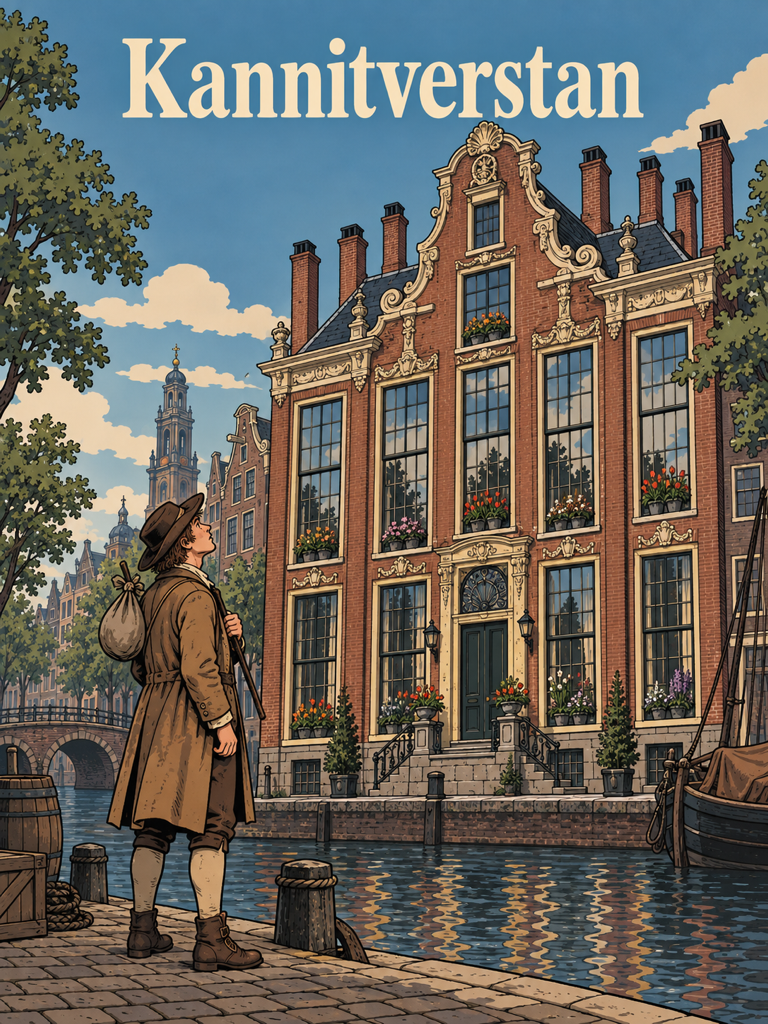
A young German journeyman arrives in Amsterdam and is dazzled by a magnificent house, and when he asks a passer-by who owns it, the busy man snaps back “Kannitverstan” — Dutch for “I can't understand you” — which the traveller mistakes for the owner's name. Wandering the docks, he credits the same rich “Herr Kannitverstan” with an entire ship's treasure just unloaded from the East Indies, and his quiet envy grows. Following a funeral procession out of respect, he learns the deceased is, once again, “Kannitverstan” — and the apparent death of the man he envied most turns his envy into a calm meditation on wealth, poverty and what everyone shares in the end.
Kannitverstan in English
Jeden Tag kann man über das Leben nachdenken. Das geht in Deutschland genauso wie in Amsterdam. Ein deutscher Handwerker lernt das auf eine besondere Art.
Every day you can think about life. You can do this in Germany just as well as in Amsterdam. A German craftsman learns this in a special way.
Der Handwerker kommt nach Amsterdam. Amsterdam ist eine große Stadt.
The craftsman comes to Amsterdam. Amsterdam is a big city.
Die Stadt hat schöne Häuser. Sie hat viele Schiffe und viele Menschen.
The city has beautiful houses. It has many ships and many people.
Plötzlich sieht er ein besonderes Haus. Das Haus ist groß und schön. So ein Haus sieht er zum ersten Mal.
Suddenly he sees a special house. The house is big and beautiful. It is the first time he has seen a house like this.
Das Haus hat sechs Kamine auf dem Dach. Es hat schöne Verzierungen. Die Fenster sind sehr groß.
The house has six chimneys on the roof. It has beautiful decorations. The windows are very big.
Zu Hause hat sein Vater nur eine kleine Tür. Diese Fenster sind größer als die Tür.
At home, his father's house has only a small door. These windows are bigger than the door.
Der Handwerker bleibt stehen. Er fragt einen Mann auf der Straße.
The craftsman stops. He asks a man on the street.
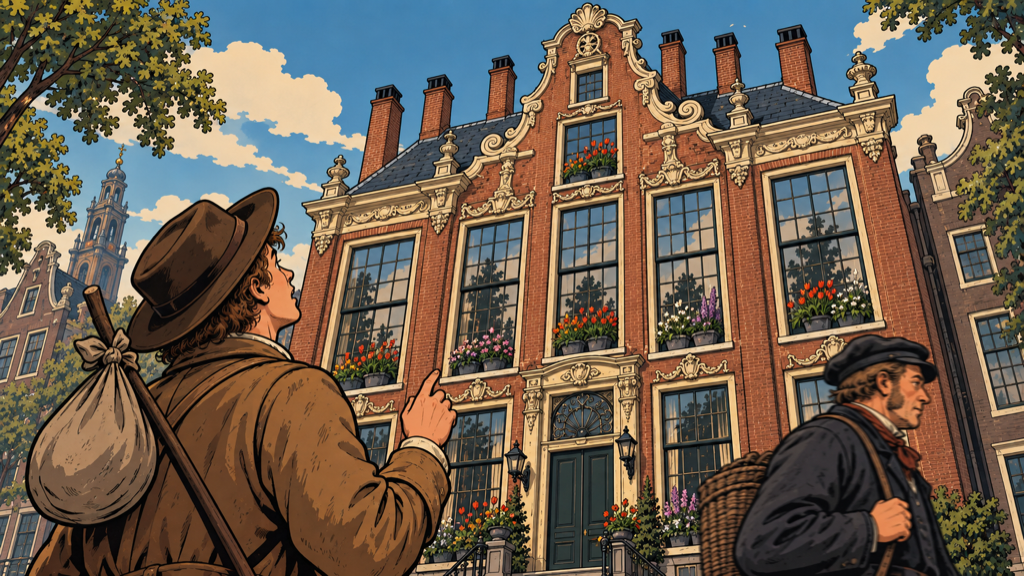
„Guter Freund“, sagt er. „Wem gehört dieses schöne Haus? Da sind Tulpen an den Fenstern.“
“Good friend,” he says. “Who owns this beautiful house? There are tulips at the windows.”
Der Mann hat keine Zeit. Er versteht kein Deutsch.
The man has no time. He does not understand German.
Er sagt nur: „Kannitverstan“. Dann geht er schnell weiter.
He only says, “Kannitverstan.” Then he quickly walks on.
„Kannitverstan“ ist ein holländisches Wort. Es bedeutet: „Ich verstehe dich nicht“.
“Kannitverstan” is a Dutch word. It means “I do not understand you.”
Aber der Handwerker versteht das falsch. Er denkt, das ist ein Name.
But the craftsman misunderstands it. He thinks it is a name.
„Herr Kannitverstan ist sicher sehr reich“, denkt er. Dann geht er weiter.
“Herr Kannitverstan is surely very rich,” he thinks. Then he walks on.
Er geht durch viele Straßen. Endlich kommt er an eine große Bucht.
He walks through many streets. Finally he comes to a big bay.
Jeden Tag hat man Gelegenheit, über das Leben nachzudenken – in Deutschland genauso wie in Amsterdam. Ein deutscher Handwerker lernt das auf einem seltsamen Weg.
Every day you have the chance to think about life – in Germany just as in Amsterdam. A German craftsman learns this in a strange way.
Er kommt in die große, reiche Stadt Amsterdam, voller schöner Häuser und Schiffe. Sofort fällt ihm ein großes, schönes Haus auf. So ein Haus hat er auf seiner ganzen Reise noch nicht gesehen.
He arrives in the big, rich city of Amsterdam, full of beautiful houses and ships. At once a big, beautiful house catches his eye. He has not seen such a house on his whole journey.
Das Haus hat sechs Kamine auf dem Dach und schöne Verzierungen. Die Fenster sind viel größer als die Haustür bei seinem Vater zu Hause.
The house has six chimneys on the roof and beautiful decorations. The windows are much bigger than his father's front door at home.
Schließlich spricht er einen Mann auf der Straße an.
Finally he speaks to a man on the street.
„Guter Freund“, sagt er, „könnt Ihr mir sagen, wem dieses schöne Haus gehört? Da sind ja Tulpen und andere Blumen an den Fenstern.“
“Good friend,” he says, “can you tell me who owns this beautiful house? There are tulips and other flowers at the windows.”
Der Mann hat aber keine Zeit und versteht kein Deutsch. Er sagt nur kurz: „Kannitverstan“ – und geht schnell weiter.
But the man has no time and does not understand German. He just says a curt “Kannitverstan” – and quickly walks on.
„Kannitverstan“ ist ein holländisches Wort und bedeutet: „Ich verstehe dich nicht.“ Aber der Handwerker versteht das falsch. Er denkt, das ist der Name des Mannes.
“Kannitverstan” is a Dutch word that means “I do not understand you.” But the craftsman misunderstands it. He thinks it is the name of the man who owns the house.
„Das muss ein sehr reicher Mann sein, dieser Herr Kannitverstan“, denkt er. Dann geht er weiter.
“He must be a very rich man, this Herr Kannitverstan,” he thinks. Then he walks on.
Straße für Straße kommt er schließlich an eine große Bucht. Dort stehen viele Schiffe und Masten dicht nebeneinander.
Street by street, he finally makes his way to a big bay. There, many ships lie close together, mast beside mast.
Der Mensch hat Gelegenheit, in Emmendingen und Gundelfingen so gut wie in Amsterdam über die Vergänglichkeit aller Dinge nachzudenken, wenn er will. Und er kann mit seinem Schicksal zufrieden sein, auch wenn nicht gerade gebratene Tauben für ihn durch die Luft fliegen. Aber auf dem seltsamsten Umweg kam einmal ein deutscher Handwerksbursche in Amsterdam durch einen Irrtum zur Wahrheit.
In Emmendingen and Gundelfingen just as much as in Amsterdam, a person has the chance to reflect on the impermanence of all things, if he wants to. And he can be content with his fate, even if good things do not exactly fall into his lap. But by the strangest of detours, a German journeyman in Amsterdam once arrived at the truth through a mistake.
Als er in diese große, reiche Handelsstadt kam, voller prächtiger Häuser, Schiffe und geschäftiger Menschen, fiel ihm sogleich ein großes Haus auf. So ein Haus hatte er auf seiner ganzen Wanderschaft von Duttlingen bis Amsterdam noch nicht gesehen. Lange betrachtete er dieses kostbare Gebäude, die sechs Kamine auf dem Dach, die schönen Gesimse und die hohen Fenster. Die Fenster waren größer als daheim die Tür am Haus seines Vaters. Schließlich sprach er einen Vorübergehenden an.
When he arrived in this big, rich trading city, full of splendid houses, ships, and busy people, a large house immediately caught his eye. He had not seen such a house on his whole journey from Duttlingen to Amsterdam. For a long time he admired this costly building – the six chimneys on the roof, the fine cornices, and the tall windows. The windows were bigger than the front door at his father's house back home. Finally he spoke to a passer-by.
„Guter Freund“, sagte er, „wisst Ihr, wem dieses wunderschöne Haus mit den Tulpen, Sternblumen und Levkojen vor den Fenstern gehört?“
“Good friend,” he said, “do you know who owns this wonderful house with the tulips, asters, and gillyflowers at the windows?”
Der Mann aber hatte vermutlich etwas Wichtigeres zu tun und verstand kein Deutsch – so wenig, wie der Fremde Holländisch verstand. Kurz und schroff sagte er nur: „Kannitverstan“ – und eilte weiter. Das war ein holländisches Wort und bedeutete auf Deutsch: „Ich kann Euch nicht verstehen.“ Aber der Fremde glaubte, es sei der Name des Mannes. „Das muss ein steinreicher Mann sein“, dachte er, und ging weiter.
But the man probably had something more important to do and understood as little German as the stranger understood Dutch. He said only a short, brusque “Kannitverstan” – and hurried on. It was a Dutch word, and in German it meant “I cannot understand you.” But the stranger believed it was the name of the man he had asked about. “That must be an extremely rich man,” he thought, and walked on.
Straße für Straße kam er an die Bucht, die man Het Ij nennt – auf Deutsch: das Ypsilon. Dort standen Schiff an Schiff und Mast an Mast. Er wusste zunächst nicht, wie er all diese Sehenswürdigkeiten mit seinen zwei Augen betrachten sollte. Schließlich zog ein großes Schiff seine Aufmerksamkeit auf sich, das kurz zuvor aus Ostindien angekommen war. Schon standen ganze Reihen von Kisten und Ballen dicht an dicht am Ufer.
Street by street, he made his way to the bay called Het Ij – in German, the Ypsilon. There, ship lay beside ship, and mast stood beside mast. At first he did not know how he could take in all these sights with just his two eyes. Finally, a large ship that had recently arrived from the East Indies caught his attention. Whole rows of crates and bales were already stacked close together on the shore.
Jeden Tag hat ein Mensch die Möglichkeit, egal ob in Emmendingen, in Gundelfingen oder in Amsterdam, über die Vergänglichkeit aller irdischen Dinge nachzudenken – wenn er nur will. Und er kann mit seinem Schicksal zufrieden sein, auch wenn ihm keine gebratenen Tauben einfach so in den Mund fliegen. Aber auf dem seltsamsten Umweg gelangte ein deutscher Handwerksbursche einmal in Amsterdam durch ein Missverständnis zur Wahrheit – und zur Erkenntnis.
Every day, a person has the chance to reflect on the impermanence of all earthly things — whether in Emmendingen, in Gundelfingen, or in Amsterdam — if he only wants to. And he can be content with his fate, even if good things don't simply fall into his lap. But by the strangest of detours, a misunderstanding once led a German journeyman in Amsterdam to the truth — and to insight.
Als er in diese große, reiche Handelsstadt kam, voller prächtiger Häuser, schaukelnder Schiffe und geschäftiger Menschen, fiel ihm sofort ein besonders großes und schönes Haus auf. So ein Haus hatte er auf seiner ganzen Reise von Duttlingen bis Amsterdam noch nie gesehen. Lange bestaunte er dieses prächtige Gebäude – die sechs Kamine auf dem Dach, die kunstvollen Gesimse und die hohen Fenster. Die Fenster waren größer als die Haustür bei seinem Vater zu Hause. Schließlich konnte er nicht widerstehen und sprach einen Passanten an.
When he arrived in this great, wealthy trading city, full of splendid houses, rocking ships, and busy people, a particularly large and beautiful house caught his eye at once. He had never seen such a house on his entire journey from Duttlingen to Amsterdam. For a long time he marvelled at this magnificent building — the six chimneys on the roof, the ornate cornices, and the tall windows. The windows were bigger than the front door at his father's house back home. Finally he could not resist speaking to a passer-by.
„Guter Freund“, sagte er zu ihm, „können Sie mir sagen, wem dieses wunderschöne Haus mit den Tulpen, Sternblumen und Levkojen in den Fenstern gehört?“
“Good friend,” he said to him, “can you tell me who owns this beautiful house, with the tulips, asters, and gillyflowers in the windows?”
Der Mann hatte vermutlich etwas Wichtigeres zu erledigen und verstand zufällig genauso wenig Deutsch, wie der Fragende Holländisch verstand – nämlich gar nichts. Kurz und schroff sagte er nur: „Kannitverstan“ – und eilte weiter. Das war ein holländisches Wort – eigentlich sogar drei – und bedeutete auf Deutsch etwa: „Ich kann Sie nicht verstehen.“ Aber der gute Fremde glaubte, das sei der Name des Mannes, nach dem er gefragt hatte. „Das muss ein steinreicher Mann sein, dieser Herr Kannitverstan“, dachte er und ging weiter.
The man probably had something more important to do, and happened to understand just as little German as the questioner understood Dutch — namely, nothing at all. He said only a short, brusque “Kannitverstan” — and hurried on. It was a Dutch word — or rather three — and in German it meant roughly “I cannot understand you.” But the good stranger believed this was the name of the man he had asked about. “He must be an extremely rich man, this Herr Kannitverstan,” he thought, and walked on.
Straße für Straße gelangte er schließlich an die Bucht, die man Het Ij nennt – auf Deutsch etwa: das Ypsilon. Dort standen Schiff an Schiff und Mast an Mast. Zuerst wusste er gar nicht, wie er mit nur zwei Augen all diese Sehenswürdigkeiten betrachten sollte. Schließlich zog ein großes Schiff seine Aufmerksamkeit auf sich, das kurz zuvor aus Ostindien angekommen war und gerade entladen wurde. Schon standen ganze Reihen von Kisten und Ballen dicht an dicht am Ufer. Immer mehr wurde herausgeladen – Fässer voller Zucker und Kaffee, Reis und Pfeffer, und, mit Verlaub gesagt, auch etwas Mäusedreck war dabei.
Street by street, he finally made his way to the bay called Het Ij — in German, roughly, the Ypsilon. There, ship lay beside ship, and mast stood beside mast. At first he had no idea how he was supposed to take in all these sights with just two eyes. At last a large ship caught his attention, one that had recently arrived from the East Indies and was just then being unloaded. Whole rows of crates and bales were already stacked close together on the shore. More and more kept being unloaded — barrels full of sugar and coffee, rice and pepper, and, if you'll excuse the expression, some mouse droppings among them too.
You have read the first 30% of Kannitverstan.
Continue in the app
This is the free opening. The rest — with audio, flashcards and translations in Persian, Turkish and Arabic — is in the app.
Every German sentence is paired with its English translation — read the German on its own, or check the English line by line. The opening is free to read here; the full story continues in the app, where it also reads in Persian, Turkish and Arabic.