 Mitlesen
Anekdote aus dem letzten preußischen Kriege
Anecdote from the Last Prussian War
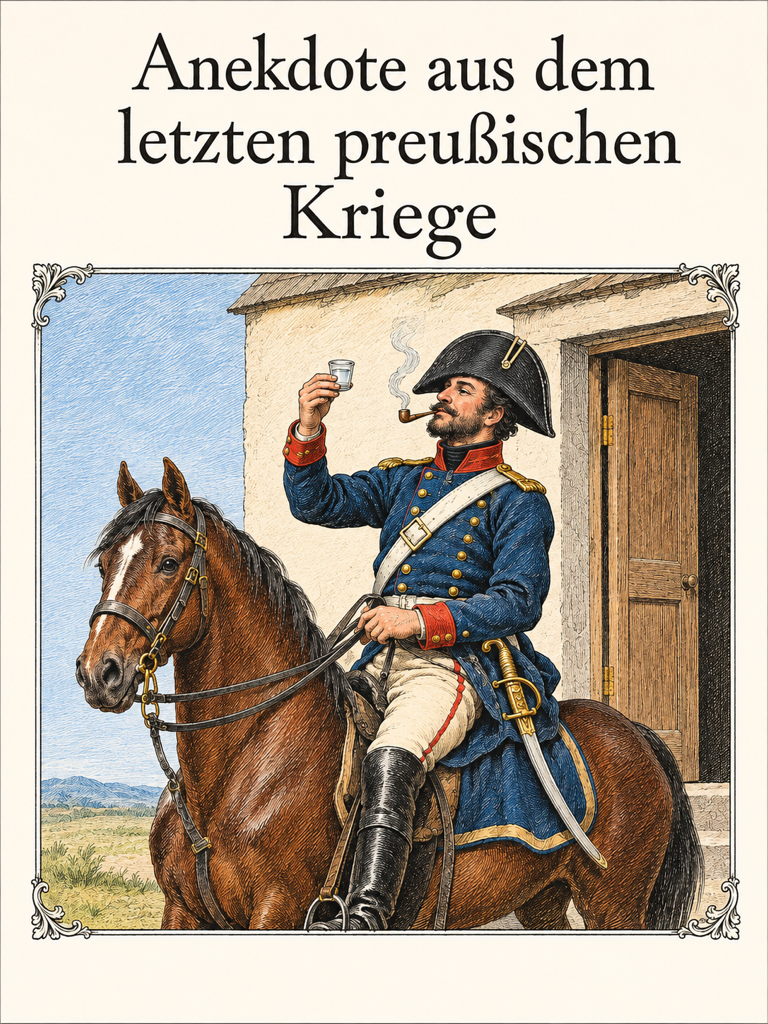
In 1806, a few hours after Napoleon has crushed the Prussian army at Jena, a village innkeeper watches the last Prussian troops leave and the French close in. Then a lone Prussian rider gallops up to his inn, covered in dust, and calls for a glass of brandy. The innkeeper begs him to flee, but the rider takes his time: another glass, then another, then a light for his pipe, while shots crack into the village and three French horsemen appear at the gate.
Anekdote aus dem letzten preußischen Kriege in English
Ich bin auf einer Reise nach Frankfurt. In einem Dorf bei Jena mache ich Pause. Dort erzählt mir der Wirt eine Geschichte.
I am travelling to Frankfurt. I stop for a rest in a village near Jena. There the innkeeper tells me a story.
Es ist eine Geschichte aus dem Krieg. Bei Jena gibt es eine große Schlacht. Die Franzosen gewinnen gegen die Preußen.
It is a story from the war. There is a great battle near Jena. The French beat the Prussians.
Ein paar Stunden nach der Schlacht ist die preußische Armee weg. Die Franzosen sind rund um das Dorf. Sie denken: Im Dorf sind noch preußische Soldaten.
A few hours after the battle, the Prussian army is gone. The French are all around the village. They think there are still Prussian soldiers in the village.
Da kommt ein preußischer Reiter ins Dorf. Er ist ganz allein.
Then a Prussian rider comes into the village. He is all alone.
Der Wirt sagt: „Der Reiter war sehr mutig.“ „Mit mehr Soldaten wie ihm verlieren die Franzosen.“ „Auch dreimal so starke Franzosen verlieren dann!“
The innkeeper says, “The rider was very brave.” “With more soldiers like him, the French would lose.” “They would lose even if they were three times as strong!”
Jetzt erzählt der Wirt die Geschichte von dem Reiter.
Now the innkeeper tells the story of the rider.
Der Reiter kommt schnell zu meinem Gasthaus, sagt der Wirt. Er ist voll Staub. Er ruft: „Herr Wirt!“
The rider rides quickly up to my inn, says the innkeeper. He is covered in dust. He calls, “Landlord!”
Ich frage: „Was gibt es?“
I ask, “What is it?”
Er sagt: „Ein Glas Schnaps!“ Er steckt sein Schwert weg. „Ich habe Durst.“
He says, “A glass of brandy!” He puts his sword away. “I am thirsty.”
Ich sage: „Oh Gott! Reiten Sie schnell weg!“ „Die Franzosen sind schon vor dem Dorf!“
I say, “Oh God! Ride away quickly!” “The French are already outside the village!”
Er sagt: „Ach was!“ Er legt die Zügel auf den Hals von seinem Pferd. „Ich habe Hunger und Durst. Den ganzen Tag gab es nichts!“
He says, “Nonsense!” He lays the reins on his horse’s neck. “I am hungry and thirsty. I have had nothing all day!”
Ich denke: Der Mann ist verrückt! Ich rufe Liese. Liese ist ein Mädchen und arbeitet bei mir.
The man is mad, I think. I call Liese. Liese is a girl who works for me.
Liese bringt eine Flasche Schnaps. Ich will dem Reiter die ganze Flasche geben. Dann reitet er hoffentlich schnell weg.
Liese brings a bottle of brandy. I want to give the rider the whole bottle. Then, I hope, he will ride away quickly.
Ich war auf einer Reise nach Frankfurt. In einem Dorf bei Jena hat mir der Wirt eine Geschichte erzählt.
I was travelling to Frankfurt. In a village near Jena, the innkeeper told me a story.
Bei Jena gab es eine große Schlacht. Die Preußen haben gegen die Franzosen verloren. Ein paar Stunden später war die Armee von Prinz Hohenlohe schon weg.
There was a great battle near Jena. The Prussians lost to the French. A few hours later, Prince Hohenlohe’s army had already gone.
Die Franzosen waren rund um das Dorf. Sie haben gedacht, dass noch preußische Soldaten im Dorf sind. Da ist ein einzelner preußischer Reiter ins Dorf gekommen.
The French were all around the village. They thought there were still Prussian soldiers in the village. Then a lone Prussian rider came into the village.
Der Wirt hat zu mir gesagt: „Dieser Reiter war unglaublich mutig.“ „Wenn alle Soldaten so mutig wären wie er, würden die Franzosen verlieren.“ „Auch wenn die Franzosen dreimal so stark wären.“
The innkeeper said to me, “This rider was incredibly brave.” “If all the soldiers were as brave as him, the French would lose.” “Even if the French were three times as strong.”
Und dann hat mir der Wirt die ganze Geschichte erzählt.
And then the innkeeper told me the whole story.
Der Kerl, sagt der Wirt, reitet ganz voll Staub zu meinem Gasthaus. Er ruft: „Herr Wirt!“
The fellow, says the innkeeper, rides up to my inn, covered in dust. He calls, “Landlord!”
„Was gibt’s?“, frage ich.
“What is it?” I ask.
„Ein Glas Schnaps!“, antwortet er. Er steckt sein Schwert zurück. „Ich habe Durst.“
“A glass of brandy!” he answers. He puts his sword away. “I am thirsty.”
„Oh Gott!“, sage ich. „Wollen Sie nicht schnell wegreiten, Freund?“ „Die Franzosen sind doch schon vor dem Dorf!“
“Oh God!” I say. “Shouldn’t you ride away quickly, friend?” “The French are right outside the village!”
„Ach was!“, sagt er und legt dem Pferd die Zügel auf den Hals. „Ich habe den ganzen Tag noch nichts gegessen und getrunken!“
“Nonsense!” he says, and lays the reins on his horse’s neck. “I have had nothing to eat or drink all day!”
Auf einer Reise nach Frankfurt kam ich in ein Dorf bei Jena. Dort erzählte mir der Gastwirt eine Geschichte aus dem Krieg.
On a journey to Frankfurt, I came to a village near Jena. There the innkeeper told me a story from the war.
Bei Jena hatte es eine große Schlacht gegeben, und die Preußen hatten gegen die Franzosen verloren. Ein paar Stunden nach der Schlacht war die Armee des Prinzen von Hohenlohe schon weg. Die Franzosen hatten das Dorf umringt, weil sie dachten, dass noch preußische Soldaten darin waren.
There had been a great battle near Jena, and the Prussians had lost to the French. A few hours after the battle, Prince Hohenlohe’s army had already gone. The French had surrounded the village, because they thought there were still Prussian soldiers in it.
Da tauchte plötzlich ein einzelner preußischer Reiter im Dorf auf. Der Wirt sagte zu mir: „Wenn alle Soldaten so mutig gewesen wären wie dieser, dann hätten die Franzosen verloren.“ „Und zwar auch dann, wenn sie dreimal so stark gewesen wären.“
Then, suddenly, a lone Prussian rider appeared in the village. The innkeeper said to me, “If all the soldiers had been as brave as this one, the French would have lost.” “Even if they had been three times as strong.”
Dann erzählte er mir, was passiert war.
Then he told me what had happened.
Dieser Kerl, sagte der Wirt, galoppiert voller Staub vor mein Gasthaus und ruft: „Herr Wirt!“
This fellow, said the innkeeper, gallops up to my inn, covered in dust, and calls, “Landlord!”
„Was gibt’s?“, frage ich.
“What is it?” I ask.
„Ein Glas Schnaps!“, antwortet er und steckt sein Schwert weg. „Ich habe Durst.“
“A glass of brandy!” he answers, and puts his sword away. “I’m thirsty.”
„Gott im Himmel!“, sage ich. „Wollen Sie nicht schnell verschwinden, Freund?“ „Die Franzosen stehen doch schon direkt vor dem Dorf!“
“Good God!” I say. “Hadn’t you better get away from here quickly, friend?” “The French are right outside the village!”
„Ach was!“, sagt er und legt dem Pferd die Zügel über den Hals. „Ich habe den ganzen Tag noch nichts gegessen und getrunken!“
“Nonsense!” he says, and lays the reins over his horse’s neck. “I haven’t had a thing to eat or drink all day!”
In einem Dorf bei Jena, auf einer Reise nach Frankfurt, erzählte mir der Gastwirt Folgendes. Mehrere Stunden nach der Schlacht bei Jena habe sich im Dorf ein einzelner preußischer Reiter gezeigt. Zu dieser Zeit sei das Dorf von der Armee des Prinzen von Hohenlohe schon ganz verlassen gewesen. Franzosen, die glaubten, es sei noch besetzt, hätten es umringt.
While I was travelling to Frankfurt, the innkeeper in a village near Jena told me the following. Several hours after the battle of Jena, he said, a lone Prussian rider had appeared in the village. By then Prince Hohenlohe’s army had left the village completely. The French, who believed it was still occupied, had surrounded it.
Der Wirt versicherte mir: Wenn alle Soldaten, die an diesem Tag mitgekämpft hatten, so tapfer gewesen wären wie dieser, dann hätten die Franzosen verlieren müssen. Und das sogar, wenn sie noch dreimal stärker gewesen wären, als sie es wirklich waren.
The innkeeper assured me that if all the soldiers who fought that day had been as brave as this one, the French would have been bound to lose. And that even if they had been three times stronger than they really were.
Dieser Kerl, sagte der Wirt, galoppierte ganz von Staub bedeckt vor meinen Gasthof und rief: „Herr Wirt!“
This fellow, said the innkeeper, galloped up to my inn, covered all over in dust, and called, “Landlord!”
„Was gibt’s?“, frage ich.
“What is it?” I ask.
„Ein Glas Branntwein!“, antwortet er. Dabei stößt er sein Schwert in die Scheide. „Ich habe Durst.“
“A glass of brandy!” he answers. As he says it, he thrusts his sword into its sheath. “I’m thirsty.”
„Gott im Himmel!“, sage ich. „Wollen Sie nicht schnell verschwinden, Freund?“ „Die Franzosen stehen ja schon dicht vor dem Dorf!“
“Good God in heaven!” I say. “Hadn’t you better clear off quickly, friend?” “The French are right outside the village!”
„Ach was!“, sagt er und legt dem Pferd den Zügel über den Hals. „Ich habe den ganzen Tag noch nichts gegessen und getrunken!“
“Nonsense!” he says, and drops the reins over his horse’s neck. “I haven’t had a bite to eat or a drop to drink all day!”
Der ist, glaube ich, vom Teufel besessen! „He, Liese!“, rufe ich und lasse ihm eine Flasche Danziger Schnaps bringen. „Da!“, sage ich und will ihm die ganze Flasche in die Hand drücken, damit er nur endlich weiterreitet.
I do believe the man is possessed by the devil! “Hey, Liese!” I call, and have a bottle of Danzig brandy brought for him. “There!” I say, and try to press the whole bottle into his hand, just so that he will ride on at last.
„Ach was!“, sagt er, stößt die Flasche weg und nimmt den Hut ab. „Was soll ich mit dem ganzen Zeug?“ Er wischt sich den Schweiß von der Stirn. „Schenken Sie ein!“, sagt er. „Denn ich habe keine Zeit!“
“Nonsense!” he says, pushes the bottle away and takes off his hat. “What would I do with all that stuff?” He wipes the sweat from his brow. “Pour!” he says. “I have no time, you see!”
You have read the first 30% of Anekdote aus dem letzten preußischen Kriege.
Continue in the app
This is the free opening. The rest — with audio, flashcards and translations in Persian, Turkish and Arabic — is in the app.
Every German sentence is paired with its English translation — read the German on its own, or check the English line by line. The opening is free to read here; the full story continues in the app, where it also reads in Persian, Turkish and Arabic.