 Mitlesen
Hundesteuer bringt rund 430 Millionen Euro ein
Dog tax brings in around €430 million
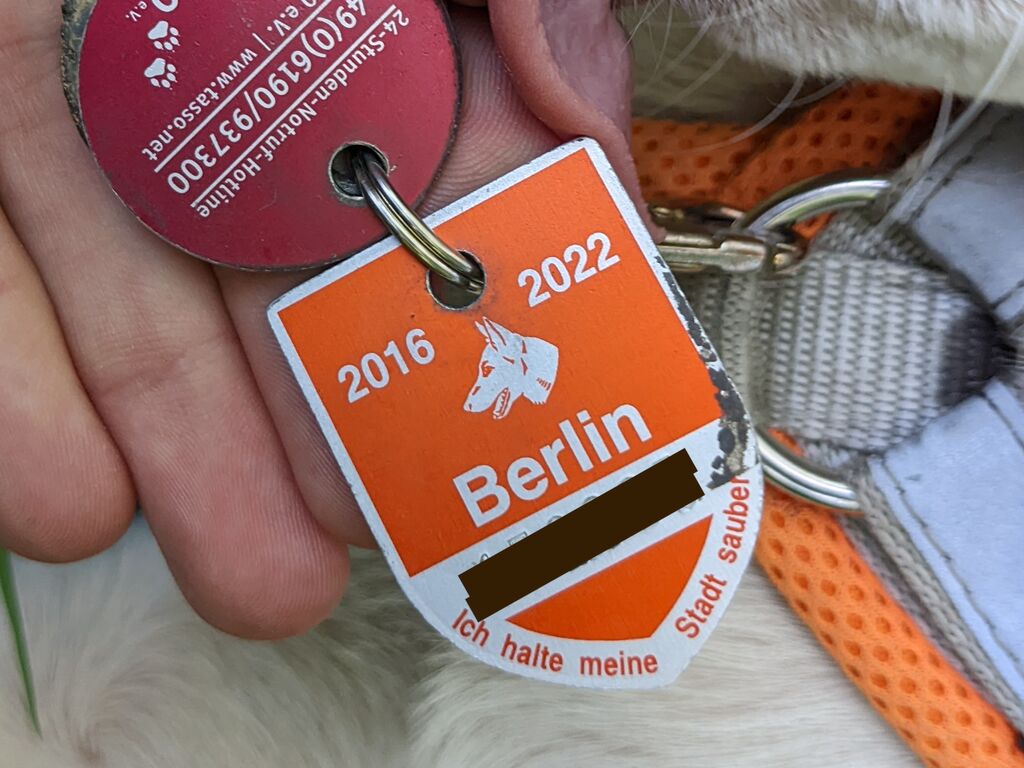
Dog owners in Germany usually pay a tax. The tax is called the dog tax. The money goes to their town or municipality. The Federal Statistical Office (Destatis) now has new figures. In 2025, the dog tax brought in around 429.7 million euros. That is almost as much as in 2024. 2024 was a record year, with 429.9 million euros. The new figures come out in time for World Dog Day. It is on 10 October.
Hundesteuer bringt rund 430 Millionen Euro ein in English
Hundebesitzer in Deutschland zahlen meistens eine Steuer. Die Steuer heißt Hundesteuer. Das Geld geht an die Stadt oder die Gemeinde.
Dog owners in Germany usually pay a tax. The tax is called the dog tax. The money goes to their town or municipality.
Das Statistische Bundesamt (Destatis) hat jetzt neue Zahlen. Im Jahr 2025 gab es rund 429,7 Millionen Euro aus der Hundesteuer. Das ist fast so viel wie im Jahr 2024.
The Federal Statistical Office (Destatis) now has new figures. In 2025, the dog tax brought in around 429.7 million euros. That is almost as much as in 2024.
2024 war ein Rekordjahr: Da gab es 429,9 Millionen Euro. Die neuen Zahlen kommen zum Welthundetag. Er ist am 10. Oktober.
2024 was a record year, with 429.9 million euros. The new figures come out in time for World Dog Day. It is on 10 October.
Wer in Deutschland einen Hund hat, zahlt meistens eine eigene Steuer: die Hundesteuer. Das Geld geht an die Stadt oder die Gemeinde. Das Statistische Bundesamt (Destatis) hat jetzt neue Zahlen zur Hundesteuer veröffentlicht. Denn am 10. Oktober ist Welthundetag.
Anyone who has a dog in Germany usually pays a separate tax: the dog tax. The money goes to their town or municipality. The Federal Statistical Office (Destatis) has now published new figures on the dog tax. The reason is that 10 October is World Dog Day.
Im Jahr 2025 haben Städte und Gemeinden rund 429,7 Millionen Euro Hundesteuer bekommen. Das ist fast so viel wie im Rekordjahr 2024 mit 429,9 Millionen Euro.
In 2025, towns and municipalities received around 429.7 million euros in dog tax. That is almost as much as in the record year of 2024, when it was 429.9 million euros.
Seit 2015 sind die Einnahmen um 33,4 Prozent gestiegen – also um rund ein Drittel. 2015 waren es nur 322 Millionen Euro.
Since 2015, revenue has risen by 33.4 percent – that is, by around a third. In 2015, it was only 322 million euros.
Jede Stadt und jede Gemeinde bestimmt selbst, wie hoch die Hundesteuer ist. Oft hängt der Betrag auch davon ab, wie viele Hunde im Haushalt leben. Auch die Hunderasse kann wichtig sein.
Each town and each municipality decides for itself how high the dog tax is. The amount often also depends on how many dogs live in the household. A dog's breed can also matter.
Außerdem ist das Futter für Hunde und Katzen teurer geworden. 2025 hat es 35,8 Prozent mehr gekostet als 2020. Im Durchschnitt sind alle Preise in dieser Zeit nur um 21,9 Prozent gestiegen.
In addition, food for dogs and cats has become more expensive. In 2025, it cost 35.8 percent more than in 2020. On average, prices in general rose by only 21.9 percent over this period.
Wer in Deutschland einen Hund hat, zahlt dafür in der Regel eine eigene Steuer: die Hundesteuer. Das Geld geht an die Stadt oder die Gemeinde. Im Jahr 2025 haben die Städte und Gemeinden mit der Hundesteuer rund 429,7 Millionen Euro eingenommen. Das hat das Statistische Bundesamt (Destatis) in Wiesbaden zum Welthundetag am 10. Oktober mitgeteilt.
Anyone who has a dog in Germany usually pays a separate tax for it: the dog tax. The money goes to their town or municipality. In 2025, towns and municipalities took in around 429.7 million euros from the dog tax. The Federal Statistical Office (Destatis) in Wiesbaden announced this in time for World Dog Day on 10 October.
2024 hat die Hundesteuer mit 429,9 Millionen Euro so viel Geld gebracht wie noch nie. 2025 waren die Einnahmen nur 0,1 Prozent niedriger. Das stetige Wachstum der letzten Jahre ist damit gestoppt.
In 2024, the dog tax brought in more money than ever before: 429.9 million euros. In 2025, revenue was only 0.1 percent lower. This means that the steady growth of recent years has stopped.
Über zehn Jahre gesehen ist der Anstieg aber deutlich. 2015 waren es noch 322 Millionen Euro – seitdem ist die Summe um 33,4 Prozent gewachsen, also um rund ein Drittel.
Over ten years, however, the increase is clear. Back in 2015, revenue was 322 million euros – since then, the total has grown by 33.4 percent, or by around a third.
Jede Stadt und jede Gemeinde entscheidet selbst, wie hoch die Hundesteuer ist. Oft hängt der Betrag auch davon ab, wie viele Hunde in einem Haushalt leben oder welche Rasse ein Hund hat. Mehr Steuereinnahmen bedeuten deshalb nicht automatisch, dass es mehr Hunde gibt.
Each town and each municipality decides for itself how high the dog tax is. The amount often also depends on how many dogs live in a household or what breed a dog is. So more tax revenue does not automatically mean that there are more dogs.
Auch beim Futter für Hunde und Katzen gibt es neue Zahlen. 2025 ist das Futter nur um 0,4 Prozent teurer geworden, während die Verbraucherpreise insgesamt um 2,2 Prozent gestiegen sind. Über fünf Jahre sieht es anders aus: 2025 hat Tierfutter 35,8 Prozent mehr gekostet als 2020. Die Verbraucherpreise insgesamt sind in dieser Zeit nur um 21,9 Prozent gestiegen.
There are also new figures on food for dogs and cats. In 2025, prices for this food went up by only 0.4 percent, while consumer prices overall rose by 2.2 percent. Over five years, the picture is different: in 2025, pet food cost 35.8 percent more than in 2020. Consumer prices overall rose by only 21.9 percent over this period.
Wer in Deutschland einen Hund hat, zahlt dafür in der Regel eine eigene Steuer: die Hundesteuer. Im Jahr 2025 haben die öffentlichen Kassen damit rund 429,7 Millionen Euro eingenommen. Das hat das Statistische Bundesamt (Destatis) in Wiesbaden mitgeteilt – passend zum Welthundetag am 10. Oktober.
Anyone who has a dog in Germany usually pays a separate tax for it: the dog tax. In 2025, it brought around 429.7 million euros into public coffers. This was announced by the Federal Statistical Office (Destatis) in Wiesbaden – just in time for World Dog Day on 10 October.
Im Vergleich zum Vorjahr hat sich kaum etwas verändert. 2024 hatte die Hundesteuer mit 429,9 Millionen Euro so viel Geld gebracht wie noch nie. 2025 lagen die Einnahmen nur 0,1 Prozent darunter. Das stetige Wachstum der vergangenen Jahre ist damit gestoppt.
Hardly anything has changed compared with the previous year. In 2024, the dog tax brought in more money than ever before, at 429.9 million euros. In 2025, revenue was only 0.1 percent below that. This means that the steady growth of recent years has come to a halt.
Über zehn Jahre betrachtet ist der Anstieg aber deutlich. 2015 hatte die Hundesteuer noch 322 Millionen Euro eingebracht. Seitdem sind die Einnahmen um rund ein Drittel gestiegen, genauer gesagt um 33,4 Prozent.
Over ten years, however, the increase is clear. Back in 2015, the dog tax brought in 322 million euros. Since then, revenue has risen by around a third – by 33.4 percent, to be precise.
Die Hundesteuer ist eine Steuer der Gemeinden. Jede Stadt und jede Gemeinde legt selbst fest, wie hoch die Steuer ist und welche Regeln gelten. An vielen Orten hängt der Betrag auch davon ab, wie viele Hunde in einem Haushalt leben oder welche Rasse ein Hund hat. Höhere Einnahmen bedeuten deshalb nicht automatisch, dass es insgesamt mehr Hunde gibt.
The dog tax is a municipal tax. Each town and each municipality decides for itself how high the tax is and which rules apply. In many places, the amount also depends on how many dogs live in a household or what breed a dog is. Higher revenue therefore does not automatically mean that there are more dogs overall.
Destatis hat außerdem Zahlen zu den Preisen für Hunde- und Katzenfutter veröffentlicht. Im Jahr 2025 mussten Tierbesitzer dafür nur 0,4 Prozent mehr bezahlen als im Jahr davor. Die Verbraucherpreise insgesamt sind im selben Zeitraum um 2,2 Prozent gestiegen.
Destatis has also published figures on the prices of dog and cat food. In 2025, pet owners had to pay only 0.4 percent more for it than in the previous year. Consumer prices overall rose by 2.2 percent over the same period.
Über mehrere Jahre sieht das Bild jedoch anders aus. Im Jahr 2025 war Futter für Hunde und Katzen um 35,8 Prozent teurer als im Jahr 2020. Die Verbraucherpreise insgesamt sind in dieser Zeit nur um 21,9 Prozent gestiegen. Die Preise für Tierfutter sind in diesen fünf Jahren also deutlich stärker gestiegen als der Durchschnitt.
Over several years, however, the picture looks different. In 2025, food for dogs and cats was 35.8 percent more expensive than in 2020. Consumer prices overall rose by only 21.9 percent over this period. So over these five years, pet food prices rose much more sharply than the average.
Read on in the app
Audio narration, tap-to-translate and flashcards — and a fresh German article every day.
Every German sentence is paired with its English translation — read the German on its own, or check the English line by line. In the app the same text also reads in Persian, Turkish and Arabic.