 Mitlesen
Vor dem Gesetz
Before the Law
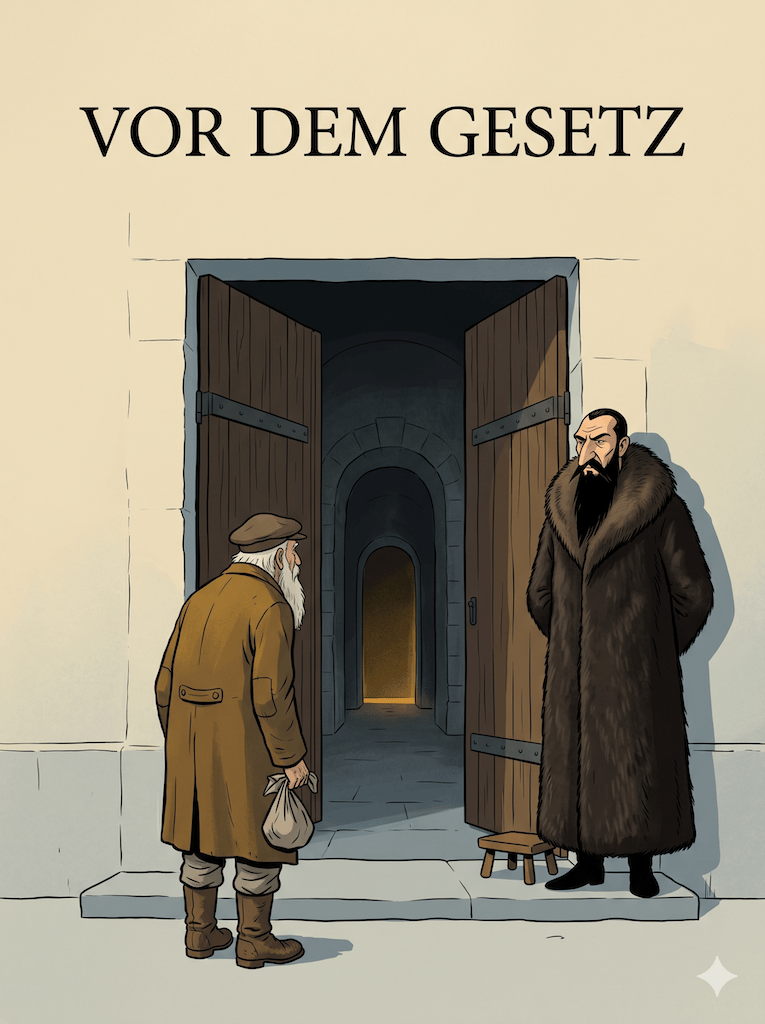
A surreal parable about a man from the country who seeks entry into “the law” but is stopped by a formidable gatekeeper. The gatekeeper tells him he cannot enter at the moment, prompting the man to wait by the open gate for his entire life. In the man's final, dying moments, the gatekeeper reveals that this specific entrance was made exclusively for him and will now be shut forever.
Vor dem Gesetz auf Englisch
Vor dem Gesetz steht ein Türhüter. Ein Mann vom Land kommt zu dem Türhüter. Der Mann möchte in das Gesetz hinein.
Before the law stands a doorkeeper. A man from the country comes to the doorkeeper. The man wants to go into the law.
Aber der Türhüter sagt: „Jetzt geht das nicht.“ Der Mann fragt: „Geht es vielleicht später?“
But the doorkeeper says: “Not now.” The man asks: “Maybe later?”
Der Türhüter antwortet: „Vielleicht, aber jetzt nicht.“
The doorkeeper answers: “Maybe, but not now.”
Das Tor zum Gesetz ist offen. Der Türhüter tritt zur Seite. Der Mann bückt sich und schaut hinein.
The gate to the law is open. The doorkeeper steps aside. The man bends down and looks inside.
Der Türhüter sieht das und lacht. Er warnt den Mann mit ernsten Worten.
The doorkeeper sees this and laughs. He warns the man with serious words.
„Versuche es nur, aber ich bin mächtig.“ „Ich bin nur der erste Türhüter.“ „Drinnen stehen noch viele andere Türhüter.“
“Just try it, but I am powerful.” “I am only the first doorkeeper.” “Inside there are many other doorkeepers.”
Jeder Türhüter ist stärker als der davor. Den dritten kann sogar der erste nicht ansehen.
Each doorkeeper is stronger than the one before. Even the first one cannot bear to look at the third.
Der Mann hat das nicht erwartet. Er denkt: Das Gesetz ist doch für alle da.
The man did not expect this. He thinks: The law should be open to everyone.
Er schaut den Türhüter genau an. Der Türhüter trägt einen großen Pelzmantel. Er hat eine große Nase und einen langen, schwarzen Bart.
He looks at the doorkeeper closely. The doorkeeper wears a big fur coat. He has a large nose and a long, black beard.
Vor dem Gesetz steht ein Türhüter. Ein Mann vom Land kommt zu dem Türhüter und bittet um Eintritt in das Gesetz. Aber der Türhüter sagt, dass er ihm den Eintritt jetzt nicht erlauben kann.
Before the law stands a doorkeeper. A man from the country comes to the doorkeeper and asks for entry into the law. But the doorkeeper says that he cannot allow him entry now.
Der Mann überlegt und fragt dann, ob er später eintreten darf. „Es ist möglich“, sagt der Türhüter, „aber jetzt nicht.“
The man thinks and then asks if he may enter later. “It is possible,” says the doorkeeper, “but not now.”
Das Tor zum Gesetz steht offen wie immer, und der Türhüter tritt zur Seite. Da bückt sich der Mann und schaut durch das Tor in das Innere. Als der Türhüter das merkt, lacht er.
The gate to the law stands open as always, and the doorkeeper steps aside. Then the man bends down and looks through the gate to the inside. When the doorkeeper notices this, he laughs.
Er sagt: „Versuche es ruhig trotz meines Verbots. Aber pass auf: Ich bin mächtig und nur der erste Türhüter. Drinnen stehen viele Türhüter, jeder stärker als der vorige. Schon den dritten kann ich nicht mehr ansehen.“
He says: “Go ahead and try, despite my prohibition. But be careful: I am powerful and only the first doorkeeper. Inside there are many doorkeepers, each stronger than the previous one. I cannot even bear to look at the third one.”
Solche Schwierigkeiten hat der Mann nicht erwartet. Er denkt: Das Gesetz soll doch für jeden offen sein.
The man did not expect such difficulties. He thinks: The law should be open to everyone.
Doch jetzt sieht er sich den Türhüter genauer an und bekommt Angst. Der Türhüter trägt einen Pelzmantel und hat eine große Spitznase. Sein Bart ist lang, dünn und schwarz wie bei einem Tartaren.
But now he looks at the doorkeeper more closely and becomes afraid. The doorkeeper wears a fur coat and has a big pointed nose. His beard is long, thin, and black, like that of a Tartar.
Da entschließt sich der Mann, lieber zu warten. Er will warten, bis er die Erlaubnis bekommt. Der Türhüter gibt ihm einen Schemel neben der Tür.
Then the man decides it is better to wait. He wants to wait until he gets permission. The doorkeeper gives him a stool beside the door.
Vor dem Gesetz steht ein Türhüter. Ein Mann vom Lande kommt zu ihm und bittet um Eintritt in das Gesetz. Aber der Türhüter sagt, dass er ihm den Eintritt jetzt nicht erlauben kann. Der Mann überlegt und fragt dann, ob er später eintreten darf.
Before the law stands a doorkeeper. A man from the country comes to him and asks for entry into the law. But the doorkeeper says that he cannot allow him entry now. The man thinks and then asks if he may enter later.
„Es ist möglich“, sagt der Türhüter, „aber jetzt nicht.“
“It is possible,” says the doorkeeper, “but not now.”
Das Tor zum Gesetz steht offen wie immer, und der Türhüter tritt zur Seite. Da bückt sich der Mann, um durch das Tor in das Innere zu sehen. Als der Türhüter das merkt, lacht er und sagt:
The gate to the law stands open as always, and the doorkeeper steps aside. Then the man bends down to look through the gate into the interior. When the doorkeeper notices this, he laughs and says:
„Wenn es dich so reizt, versuche es trotz meines Verbots hineinzugehen. Aber merke: Ich bin mächtig, und ich bin nur der unterste Türhüter. Von Saal zu Saal stehen weitere Türhüter, einer mächtiger als der andere. Schon den Anblick des dritten kann nicht einmal ich mehr ertragen.“
“If it tempts you so much, try going in despite my prohibition. But take note: I am powerful, and I am only the lowest doorkeeper. From hall to hall there are more doorkeepers, each more powerful than the last. Even I cannot bear the sight of the third one any longer.”
Solche Schwierigkeiten hat der Mann vom Lande nicht erwartet. Er denkt, dass das Gesetz doch für jeden und immer offen sein soll.
The man from the country did not expect such difficulties. He thinks the law should be open to everyone, always.
Doch jetzt sieht er den Türhüter genauer an: den Pelzmantel, die große Spitznase und den langen, dünnen, schwarzen Tartarenbart. Da entschließt er sich, lieber zu warten, bis er die Erlaubnis zum Eintritt bekommt. Der Türhüter gibt ihm einen Schemel und lässt ihn neben der Tür sitzen.
But now he looks at the doorkeeper more closely: the fur coat, the big pointed nose, and the long, thin, black Tartar beard. Then he decides it is better to wait until he receives permission to enter. The doorkeeper gives him a stool and lets him sit beside the door.
Vor dem Gesetz steht ein Türhüter. Zu diesem Türhüter kommt ein Mann vom Lande und bittet um Eintritt in das Gesetz. Aber der Türhüter sagt, dass er ihm den Eintritt jetzt nicht gewähren kann. Der Mann überlegt und fragt dann, ob er also später eintreten dürfe.
Before the law stands a doorkeeper. To this doorkeeper comes a man from the country, asking for entry into the law. But the doorkeeper says that he cannot grant him entry now. The man thinks it over and then asks if he may enter later.
„Es ist möglich“, sagt der Türhüter, „jetzt aber nicht.“
“It is possible,” says the doorkeeper, “but not now.”
Da das Tor zum Gesetz offen steht wie immer und der Türhüter beiseite tritt, bückt sich der Mann, um durch das Tor in das Innere zu sehen. Als der Türhüter das merkt, lacht er und sagt:
Since the gate to the law stands open as always and the doorkeeper steps aside, the man bends down to look through the gate into the interior. When the doorkeeper notices this, he laughs and says:
„Wenn es dich so lockt, versuche es doch trotz meines Verbotes hineinzugehen. Merke aber: Ich bin mächtig. Und ich bin nur der unterste Türhüter. Von Saal zu Saal stehen aber Türhüter, einer mächtiger als der andere. Schon den Anblick des Dritten kann nicht einmal ich mehr ertragen.“
“If it attracts you so, go ahead and try to enter despite my prohibition. But take note: I am powerful. And I am only the lowest doorkeeper. From hall to hall, however, stand doorkeepers, each more powerful than the last. Even I can no longer bear the sight of the third.”
Solche Schwierigkeiten hat der Mann vom Lande nicht erwartet. Das Gesetz soll doch jedem und immer zugänglich sein, denkt er. Doch als er jetzt den Türhüter in seinem Pelzmantel genauer ansieht, fallen ihm die große Spitznase und der lange, dünne, schwarze Tartarenbart auf. Da entschließt er sich, lieber zu warten, bis er die Erlaubnis zum Eintritt bekommt. Der Türhüter gibt ihm einen Schemel und lässt ihn neben der Tür sitzen.
The man from the country did not expect such difficulties. The law should after all be accessible to everyone, always, he thinks. But when he now looks more closely at the doorkeeper in his fur coat, the big pointed nose and the long, thin, black Tartar beard catch his attention. Then he decides it is better to wait until he gets permission to enter. The doorkeeper gives him a stool and lets him sit beside the door.
Du hast die ersten 30 % von Vor dem Gesetz gelesen.
In der App weiterlesen
Das ist der kostenlose Anfang. Den Rest – mit Audio, Karteikarten und Übersetzungen auf Persisch, Türkisch und Arabisch – gibt es in der App.
Zu jedem deutschen Satz gehört die englische Übersetzung – lies nur das Deutsche oder schau Satz für Satz ins Englische. Der Anfang steht hier kostenlos; weiter geht die Geschichte in der App, dort auch auf Persisch, Türkisch und Arabisch.