 Mitlesen
Der süße Brei
The Sweet Porridge
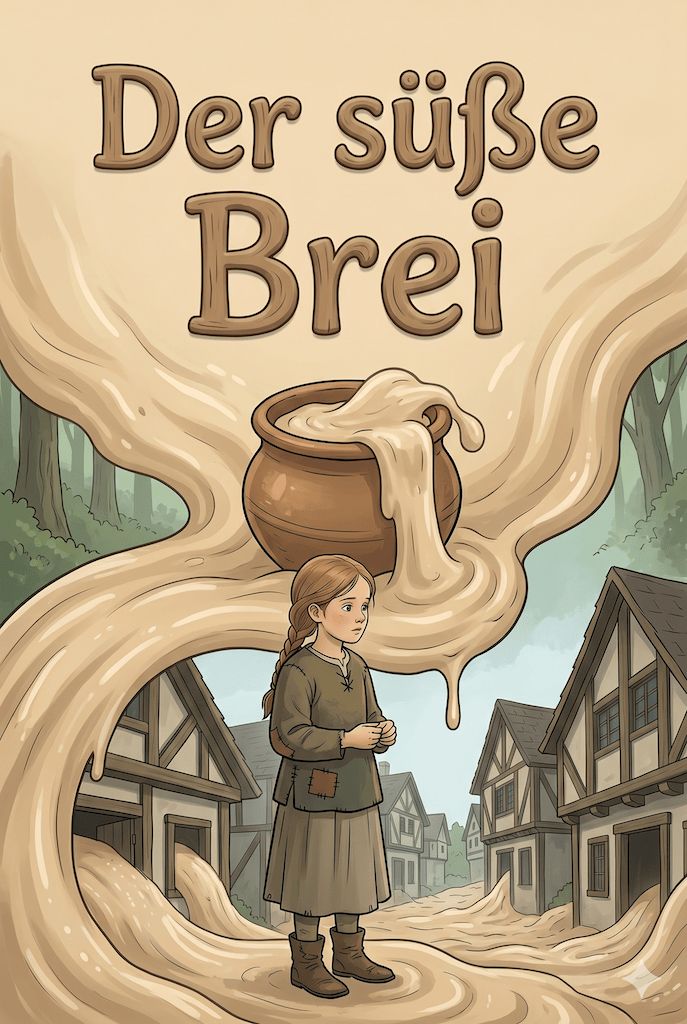
A poor, pious girl meets an old woman in the forest who gives her a magical pot to help alleviate her family's hunger. By saying “Boil, little pot, boil,” the pot produces infinite sweet millet porridge, and it stops when told “Stop, little pot, stop.” The central conflict of the story arises when the girl's mother attempts to use the pot but forgets the command to make it stop.
Der süße Brei in English
Es war einmal ein armes Mädchen. Es lebt bei seiner Mutter. Sie haben nichts zu essen.
Once upon a time, there was a poor girl. She lives with her mother. They have nothing to eat.
Das Mädchen geht in den Wald. Dort trifft es eine alte Frau.
The girl goes into the forest. There she meets an old woman.
Die Frau kennt seinen Kummer schon. Sie schenkt ihm ein Töpfchen.
The woman already knows her sorrow. She gives her a little pot.
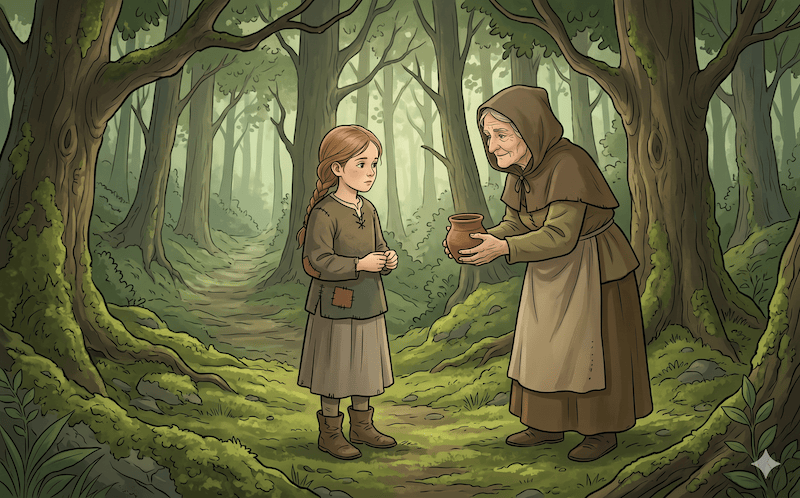
Die Frau erklärt die Zauberwörter. Das Mädchen sagt: „Töpfchen, koche.“ Dann kocht das Töpfchen süßen Brei.
The woman explains the magic words. The girl says, “Little pot, cook.” Then the little pot cooks sweet porridge.
Das Mädchen sagt: „Töpfchen, steh.“ Dann hört das Töpfchen auf zu kochen.
The girl says, “Little pot, stop.” Then the little pot stops cooking.
Es war einmal ein armes, frommes Mädchen. Es lebt allein mit seiner Mutter. Sie haben nichts mehr zu essen.
Once upon a time, there was a poor, pious girl. She lives alone with her mother. They have nothing left to eat.
Darum geht das Mädchen in den Wald. Dort trifft es eine alte Frau. Die Frau kennt seinen Kummer schon.
So the girl goes into the forest. There she meets an old woman. The woman already knows her sorrow.
Die alte Frau schenkt dem Mädchen ein Töpfchen. Sie erklärt ihm die Zauberwörter. Wenn man sagt: „Töpfchen, koche“, dann kocht es süßen Hirsebrei. Wenn man sagt: „Töpfchen, steh“, dann hört es auf.
The old woman gives the girl a little pot. She explains the magic words to her. If you say, “Little pot, cook,” it cooks sweet millet porridge. If you say, “Little pot, stop,” it stops.
Das Mädchen bringt den Topf nach Hause. Die Mutter freut sich sehr. Von nun an haben sie keinen Hunger mehr. Sie essen süßen Brei, so oft sie wollen.
The girl brings the pot home. The mother is very happy. From now on, they are no longer hungry. They eat sweet porridge whenever they want.
Eines Tages ist das Mädchen nicht zu Hause. Die Mutter sagt zum Topf: „Töpfchen, koche.“ Das Töpfchen kocht süßen Brei. Die Mutter isst so viel, bis sie satt ist.
One day the girl is not at home. The mother says to the pot, “Little pot, cook.” The little pot cooks sweet porridge. The mother eats until she is full.
Es war einmal ein armes, frommes Mädchen, das allein mit seiner Mutter lebte. Die beiden waren so arm, dass sie nichts mehr zu essen hatten. Eines Tages ging das Kind hinaus in den Wald.
Once upon a time, there was a poor, pious girl who lived alone with her mother. The two were so poor that they had nothing left to eat. One day the child went out into the forest.
Im Wald traf das Mädchen eine alte Frau, die seinen Kummer schon kannte. Die Frau schenkte dem Mädchen ein kleines Töpfchen und erklärte ihm die Zauberwörter. Wenn man sagte „Töpfchen, koche“, kochte es guten, süßen Hirsebrei. Und wenn man sagte „Töpfchen, steh“, hörte es wieder auf zu kochen.
In the forest the girl met an old woman who already knew her sorrow. The woman gave the girl a small pot and explained the magic words to her. If you said, “Little pot, cook,” it cooked good, sweet millet porridge. And if you said, “Little pot, stop,” it stopped cooking again.
Das Mädchen brachte das Töpfchen zu seiner Mutter nach Hause. Von nun an waren sie ihre Armut und ihren Hunger los. Sie aßen süßen Brei, so oft sie wollten.
The girl brought the little pot home to her mother. From then on they were free of their poverty and hunger. They ate sweet porridge whenever they wanted.
Eines Tages war das Mädchen nicht zu Hause. Da sagte die Mutter zum Topf: „Töpfchen, koche.“ Das Töpfchen kochte, und sie aß sich satt. Doch als sie wollte, dass es aufhörte, wusste sie das richtige Wort nicht mehr.
One day the girl was not at home. Then the mother said to the pot, “Little pot, cook.” The little pot cooked, and she ate her fill. But when she wanted it to stop, she no longer remembered the right word.
Also kochte das Töpfchen einfach weiter. Der Brei stieg über den Rand hinaus und kochte immerzu. Bald war die Küche voll, dann das ganze Haus, dann das nächste Haus und die Straße dahinter. Es war, als wollte er die ganze Welt satt machen, und niemand wusste sich zu helfen.
So the little pot simply kept cooking. The porridge rose over the rim and cooked on and on. Soon the kitchen was full, then the whole house, then the next house and the street behind it. It was as if it wanted to feed the entire world, and no one knew what to do.
Es war einmal ein armes, frommes Mädchen, das mit seiner Mutter ganz allein lebte. Die beiden waren bitter arm und hatten schließlich nichts mehr zu essen. Darum ging das Kind eines Tages hinaus in den Wald.
Once upon a time, there was a poor, pious girl who lived all alone with her mother. The two were bitterly poor and at last had nothing left to eat. And so one day the child went out into the forest.
Dort begegnete ihm eine alte Frau, die seinen Kummer schon kannte, ohne dass es etwas sagen musste. Die Frau schenkte dem Mädchen ein kleines Töpfchen und erklärte ihm die Zauberwörter. Sagte man „Töpfchen, koche“, so kochte es guten, süßen Hirsebrei. Und sagte man „Töpfchen, steh“, so hörte es wieder auf zu kochen.
There she came upon an old woman who already knew her sorrow without her having to say a word. The woman gave the girl a small pot and explained the magic words to her. If one said, “Little pot, cook,” it cooked good, sweet millet porridge. And if one said, “Little pot, stop,” it stopped cooking again.
Das Mädchen brachte den Topf seiner Mutter nach Hause, und von nun an waren sie ihre Armut und ihren Hunger los. Sie aßen süßen Brei, so oft sie Lust hatten.
The girl brought the pot home to her mother, and from then on they were free of their poverty and hunger. They ate sweet porridge as often as they pleased.
Eines Tages war das Mädchen ausgegangen. Da sprach die Mutter zu dem Topf: „Töpfchen, koche.“ Das Töpfchen kochte, und sie aß sich ordentlich satt. Nun wollte sie, dass es wieder aufhörte, doch sie wusste das richtige Wort einfach nicht mehr.
One day the girl had gone out. Then the mother spoke to the pot, “Little pot, cook.” The little pot cooked, and she ate her fill thoroughly. Now she wanted it to stop again, but she simply could not remember the right word.
Also kochte das Töpfchen fort, und der Brei stieg über den Rand hinaus und kochte immerzu. Bald war die Küche voll, dann das ganze Haus, dann das nächste Haus und schließlich die ganze Straße. Es war, als wollte der Brei die ganze Welt satt machen, und niemand wusste sich in dieser Not zu helfen.
So the little pot kept on cooking, and the porridge rose over the rim and cooked on and on. Soon the kitchen was full, then the whole house, then the next house, and finally the entire street. It was as if the porridge wanted to feed the entire world, and no one knew how to help in this distress.
You have read the first 30% of Der süße Brei.
Continue in the app
This is the free opening. The rest — with audio, flashcards and translations in Persian, Turkish and Arabic — is in the app.
Every German sentence is paired with its English translation — read the German on its own, or check the English line by line. The opening is free to read here; the full story continues in the app, where it also reads in Persian, Turkish and Arabic.