 Mitlesen
Der gestiefelte Kater
Puss in Boots
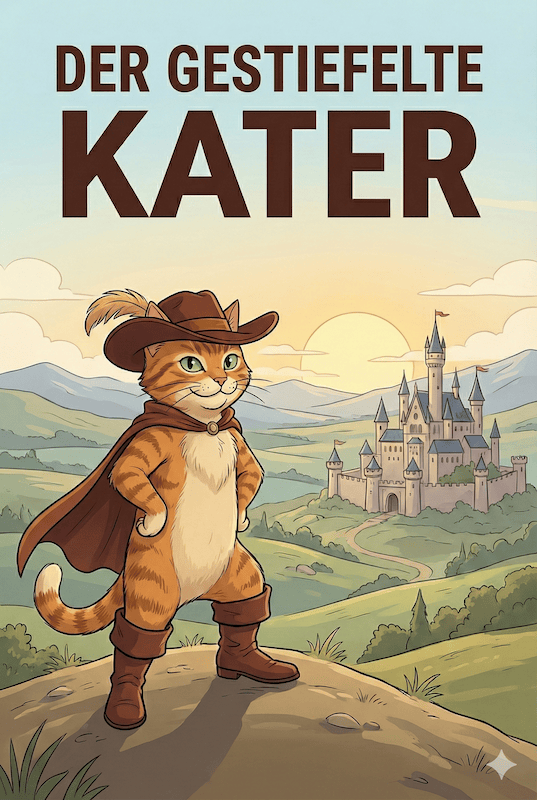
After a miller dies, his youngest son inherits almost nothing except a cat. The cat asks for boots and a sack and promises to change his owner’s fortunes. Using charm, clever staging, and bold persuasion, the cat opens doors at court and creates opportunities the young man could never reach alone.
Der gestiefelte Kater in English
Ein Müller hat drei Söhne. Er hat auch eine Mühle, einen Esel und einen Kater.
A miller has three sons. He also has a mill, a donkey, and a cat.
Der Müller stirbt. Der jüngste Sohn bekommt nur den Kater.
The miller dies. The youngest son only gets the cat.
Der Sohn ist sehr traurig. Was kann er mit dem Kater machen?
The son is very sad. What can he do with the cat?
Aber der Kater kann sprechen. Er sagt: „Kaufe mir Stiefel. Ich helfe dir.“
But the cat can talk. He says: “Buy me boots. I will help you.”
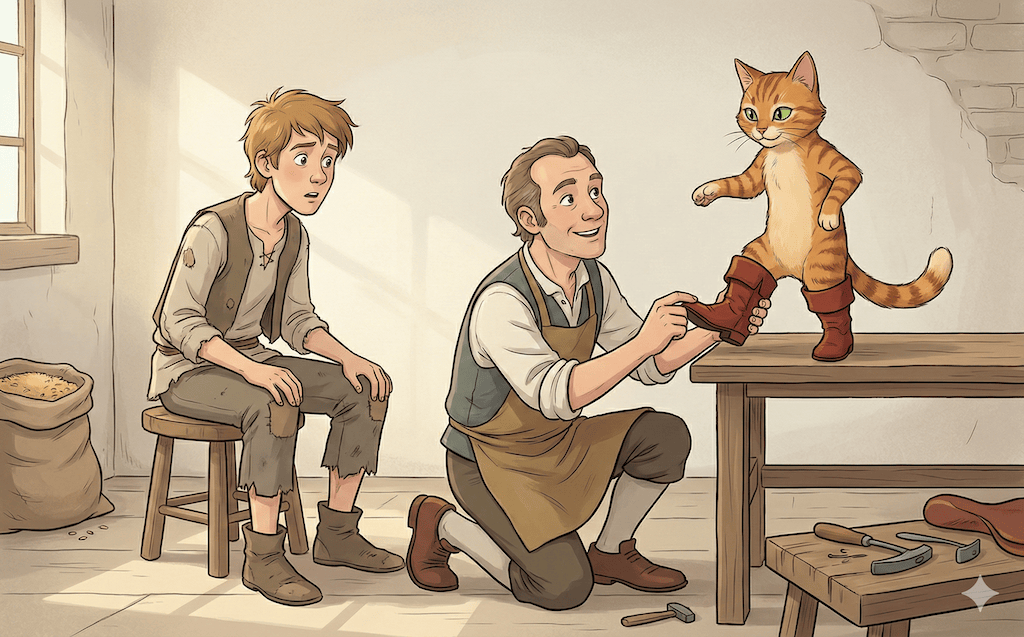
Der Sohn kauft dem Kater Stiefel. Der Kater zieht die Stiefel an.
The son buys the cat boots. The cat puts on the boots.
Der Kater geht jetzt wie ein Mensch. Er hat eine gute Idee.
The cat now walks like a person. He has a good idea.
Im Land gibt es einen König. Der Kater fängt Hühner für den König.
In the land, there is a king. The cat catches chickens for the king.
Er geht zum König und sagt: „Die Hühner sind von meinem Herrn.“ „Mein Herr ist ein Graf.“
He goes to the king and says: “The chickens are from my master.” “My master is a count.”
Der König ist sehr froh. Er gibt dem Kater viel Gold für den Grafen.
The king is very happy. He gives the cat a lot of gold for the count.
Ein Müller hatte drei Söhne, eine Mühle, einen Esel und einen Kater. Als der Müller gestorben ist, haben die Söhne alles geteilt.
A miller had three sons, a mill, a donkey, and a cat. When the miller died, the sons divided everything.
Der älteste Sohn hat die Mühle bekommen und der zweite den Esel. Dem jüngsten Sohn ist nur der Kater geblieben.
The oldest son got the mill and the second got the donkey. Only the cat was left for the youngest son.
Der jüngste Sohn war sehr traurig. Er hat gedacht: „Was kann ich mit einem Kater machen?“
The youngest son was very sad. He thought: “What can I do with a cat?”
Aber der Kater konnte sprechen. Er hat gesagt: „Du musst mich nicht töten. Lass mir bitte Stiefel machen, dann helfe ich dir.“
But the cat could talk. He said: “You don’t have to kill me. Please have boots made for me, then I will help you.”
Der Müllerssohn war sehr überrascht, dass der Kater sprechen konnte. Er hat ihm Stiefel machen lassen.
The miller's son was very surprised that the cat could talk. He had boots made for him.
Der Kater hat die Stiefel angezogen. Er hat einen Sack mit Korn genommen und ist aus dem Haus gegangen.
The cat put on the boots. He took a sack with grain and went out of the house.
In diesem Land hat ein König gelebt. Der König hat Rebhühner sehr gern gegessen, aber es war schwer, sie zu fangen.
A king lived in this land. The king loved to eat partridges, but it was hard to catch them.
Der Kater wusste das und hatte einen Plan. Er ist in den Wald gegangen und hat dort eine Falle mit dem Korn gebaut.
The cat knew this and had a plan. He went into the forest and built a trap there with the grain.
Viele Rebhühner sind gekommen und in den Sack gegangen. Der Kater hat den Sack schnell zugezogen und die Vögel gefangen.
Many partridges came and went into the sack. The cat quickly pulled the sack shut and caught the birds.
Dann ist er mit dem Sack zum Schloss vom König gegangen. Die Wachen am Schloss waren überrascht, aber sie haben ihn zum König gelassen.
Then he went with the sack to the king's castle. The guards at the castle were surprised, but they let him see the king.
Ein Müller hatte drei Söhne, eine Mühle, einen Esel und einen Kater. Die Söhne arbeiteten in der Mühle, der Esel transportierte das Getreide und der Kater fing Mäuse.
A miller had three sons, a mill, a donkey, and a cat. The sons worked in the mill, the donkey transported the grain, and the cat caught mice.
Als der Müller starb, teilten die Söhne das Erbe. Der älteste Sohn bekam die Mühle und der zweite den Esel. Für den jüngsten Sohn blieb nur der Kater übrig.
When the miller died, the sons divided the inheritance. The oldest son got the mill and the second got the donkey. For the youngest son, only the cat was left.
Der jüngste Sohn war sehr traurig und dachte: „Ich habe wirklich Pech gehabt.“ Meine Brüder können arbeiten, aber was soll ich mit einem Kater machen? Ich kann höchstens Handschuhe aus seinem Fell machen lassen, aber dann ist er tot.“
The youngest son was very sad and thought: 'I have been really unlucky.' My brothers can work, but what am I supposed to do with a cat? At most, I can have gloves made from his fur, but then he will be dead.'
Aber der Kater hatte alles verstanden und sagte: „Du musst mich nicht töten.“ Lass mir lieber ein Paar Stiefel machen, damit ich unter die Leute gehen kann. Dann werde ich dir bald helfen können.“
But the cat had understood everything and said: 'You don't have to kill me.' Instead, have a pair of boots made for me so I can go out among people. Then I will soon be able to help you.'
Der Müllerssohn war überrascht, dass der Kater sprechen konnte. Er ließ ihm von einem Schuster ein Paar Stiefel machen.
The miller's son was surprised that the cat could speak. He had a shoemaker make him a pair of boots.
Als die Stiefel fertig waren, zog der Kater sie an. Er nahm einen Sack mit etwas Korn und ging auf zwei Beinen aus dem Haus.
When the boots were ready, the cat put them on. He took a sack with some grain and walked out of the house on two legs.
In diesem Land lebte ein König, der sehr gerne Rebhühner aß. Es war aber sehr schwierig, diese scheuen Vögel zu fangen. Der Kater wusste das und hatte einen Plan.
In this country lived a king who loved to eat partridges. But it was very difficult to catch these shy birds. The cat knew this and had a plan.
Im Wald öffnete der Kater seinen Sack und legte eine Falle mit dem Korn. Dann versteckte er sich und wartete geduldig.
In the forest, the cat opened his sack and set a trap with the grain. Then he hid and waited patiently.
Bald kamen die Rebhühner und gingen in den Sack, um das Korn zu fressen. Als genug Vögel darin waren, zog der Kater die Schnur zu und fing sie. Dann ging er mit dem vollen Sack direkt zum Schloss des Königs.
Soon the partridges came and went into the sack to eat the grain. When enough birds were inside, the cat pulled the string shut and caught them. Then he went with the full sack directly to the king's castle.
Am Schlosstor fragte eine Wache: „Halt! Wohin willst du?“ „Zum König!“, antwortete der Kater selbstbewusst. Die Wachen wunderten sich, aber sie ließen ihn durch.
At the castle gate, a guard asked: 'Halt! Where are you going?' 'To the king!' the cat answered confidently. The guards were surprised, but they let him pass.
Ein Müller hatte drei Söhne, eine Mühle, einen Esel und einen Kater. Die Söhne waren für das Mahlen des Getreides zuständig. Der Esel brachte das Korn und transportierte das Mehl, und der Kater fing die Mäuse.
A miller had three sons, a mill, a donkey, and a cat. The sons were responsible for grinding the grain. The donkey brought the grain and transported the flour, and the cat caught the mice.
Als der Müller starb, teilten die drei Söhne das Erbe unter sich auf. Der Älteste bekam die Mühle, der Zweite erhielt den Esel. Dem Jüngsten blieb nur der Kater, denn es gab sonst nichts mehr für ihn.
When the miller died, the three sons divided the inheritance among themselves. The eldest got the mill, the second received the donkey. The youngest was left with only the cat, because there was nothing else for him.
Der jüngste Sohn war sehr traurig und dachte sich: „Ich habe wirklich das schlechteste Erbe bekommen.“ Er überlegte, dass sein ältester Bruder mahlen und sein zweiter auf dem Esel reiten konnte. „Was kann ich nur mit einem Kater anfangen?“, fragte er sich. „Das Einzige wäre, mir aus seinem Fell Handschuhe zu machen, aber dann ist er tot.“
The youngest son was very sad and thought to himself: “I have truly gotten the worst inheritance.” He considered that his oldest brother could grind grain and his second could ride the donkey. “What can I possibly do with a cat?” he asked himself. “The only thing would be to make gloves for myself from his fur, but then he would be dead.”
„Hör zu“, sagte plötzlich der Kater, der alles verstanden hatte. „Du musst mich nicht töten, nur um ein Paar einfache Handschuhe aus meinem Fell zu bekommen.“ Er schlug vor: „Lass mir lieber ein Paar Stiefel anfertigen, damit ich ausgehen und mich unter den Leuten zeigen kann.“ Dann versprach er: „Ich versichere dir, dann wird dir bald geholfen sein.“
“Listen,” the cat, who had understood everything, suddenly said. “You don't have to kill me just to get a pair of simple gloves from my fur.” He suggested: “Instead, have a pair of boots made for me, so I can go out and show myself among people.” Then he promised: “I assure you, then you will soon be helped.”
Der Müllerssohn war sehr überrascht, dass der Kater sprechen konnte. Zufällig kam ein Schuster vorbei, den er hereinrief, um dem Kater Stiefel anfertigen zu lassen. Als die Stiefel fertig waren, zog der Kater sie an, nahm einen Sack und füllte etwas Korn hinein. Dann warf er sich den Sack über den Rücken und verließ das Haus auf zwei Beinen, genau wie ein Mensch.
The miller's son was very surprised that the cat could talk. By chance, a shoemaker came by, whom he called in to have boots made for the cat. When the boots were ready, the cat put them on, took a sack, and filled it with some grain. Then he threw the sack over his back and left the house on two legs, just like a person.
Zu dieser Zeit regierte ein König im Land, der eine besondere Vorliebe für Rebhühner hatte. Es war jedoch sehr schwierig, welche zu fangen, obwohl der Wald voll von ihnen war. Die Vögel waren so scheu, dass kein Jäger sie erwischen konnte. Der Kater wusste davon und war überzeugt, dass er bei dieser Aufgabe erfolgreicher sein könnte.
At that time, a king ruled the land who had a special fondness for partridges. However, it was very difficult to catch any, even though the forest was full of them. The birds were so shy that no hunter could catch them. The cat knew about this and was convinced that he could be more successful at this task.
Als der Kater in den Wald kam, öffnete er seinen Sack und streute das Korn auf den Boden. Er legte die Zugschnur ins Gras und führte sie bis zu seinem Versteck hinter einer Hecke. Dort wartete er geduldig auf die Rebhühner.
When the cat arrived in the forest, he opened his sack and scattered the grain on the ground. He laid the drawstring in the grass and led it to his hiding place behind a hedge. There he waited patiently for the partridges.
Es dauerte nicht lange, bis die Rebhühner kamen und eines nach dem anderen in den Sack hüpften, um das Korn zu fressen. Als genug Vögel im Sack waren, zog der Kater die Schnur fest zu. Er tötete die Vögel, warf sich den Sack über die Schulter und ging direkt zum Schloss des Königs.
It wasn't long before the partridges came and hopped into the sack one after another to eat the grain. When enough birds were in the sack, the cat pulled the string tight. He killed the birds, threw the sack over his shoulder, and went straight to the king's castle.
Die Wache am Schlosstor rief: „Halt! Wohin des Wegs?“ „Zum König“, antwortete der Kater knapp. „Bist du verrückt? Ein Kater will zum König?“, fragte der Wachmann ungläubig. Ein anderer sagte jedoch: „Lass ihn nur gehen, der König langweilt sich oft und vielleicht amüsiert ihn der Kater.“
The guard at the castle gate shouted: “Halt! Where are you going?” “To the king,” the cat answered curtly. “Are you crazy? A cat wants to see the king?” the guard asked in disbelief. However, another one said: “Just let him go, the king is often bored and maybe the cat will amuse him.”
Als der Kater vor den König trat, verbeugte er sich tief und sprach mit Respekt. „Mein Herr, der Graf“, sagte er und nannte einen langen, eleganten Namen, „schickt seine besten Grüße.“ Er präsentierte die Vögel und fügte hinzu: „Er sendet Euch diese Rebhühner, die er gerade frisch gefangen hat.“
When the cat came before the king, he bowed deeply and spoke with respect. “My lord, the Count,” he said, giving a long, elegant name, “sends his best regards.” He presented the birds and added: “He sends you these partridges, which he has just freshly caught.”
Der König war beeindruckt von den schönen, fetten Rebhühnern und freute sich sehr über das Geschenk. Er befahl seinen Dienern, dem Kater so viel Gold aus der Schatzkammer in den Sack zu füllen, wie er tragen konnte. „Bring das deinem Herrn und richte ihm meinen besten Dank für dieses großzügige Geschenk aus“, sagte der König.
The king was impressed by the beautiful, plump partridges and was very pleased with the gift. He ordered his servants to fill the cat's sack with as much gold from the treasury as he could carry. “Bring this to your master and give him my best thanks for this generous gift,” said the king.
You have read the first 30% of Der gestiefelte Kater.
Continue in the app
This is the free opening. The rest — with audio, flashcards and translations in Persian, Turkish and Arabic — is in the app.
Every German sentence is paired with its English translation — read the German on its own, or check the English line by line. The opening is free to read here; the full story continues in the app, where it also reads in Persian, Turkish and Arabic.