 Mitlesen
Die Bremer Stadtmusikanten
The Bremen Town Musicians
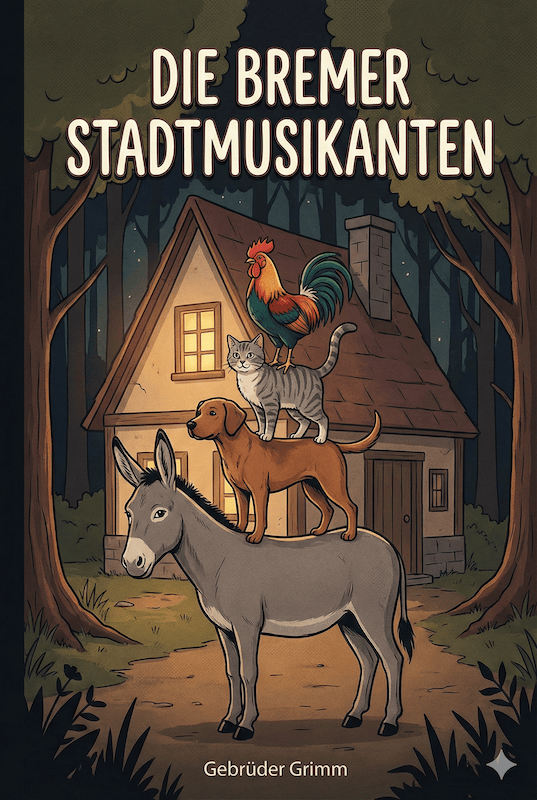
Die Bremer Stadtmusikanten is a short fairy tale about four aging domestic animals a donkey, dog, cat, and rooster who are no longer wanted by their masters. Facing neglect or death, they decide to run away and travel together to Bremen, where they hope to become town musicians.
Die Bremer Stadtmusikanten auf Englisch
Ein Mann hat einen Esel. Der Esel trägt viele Säcke zur Mühle. Aber jetzt ist der Esel alt und kann nicht mehr gut arbeiten. Der Mann will den Esel nicht mehr füttern. Der Esel denkt: „Ich gehe weg! Ich gehe nach Bremen. Ich will dort Stadtmusikant werden.“
A man has a donkey. The donkey carries many sacks to the mill. But now the donkey is old and can no longer work well. The man no longer wants to feed the donkey. The donkey thinks: “I am leaving! I am going to Bremen. I want to become a town musician there.”
Der Esel geht ein Stück. Er sieht einen Hund am Weg. Der Hund ist müde.
The donkey walks a bit. He sees a dog by the road. The dog is tired.
Der Esel fragt: „Warum bist du so müde?“
The donkey asks: “Why are you so tired?”
Der Hund sagt: „Ich bin alt. Ich kann nicht mehr gut jagen. Mein Herr will mich totschlagen. Ich bin weggelaufen. Was soll ich jetzt machen?“
The dog says: “I am old. I can no longer hunt well. My master wants to kill me. I have run away. What should I do now?”
Der Esel sagt: „Ich gehe nach Bremen. Ich werde dort Stadtmusikant. Komm mit! Wir machen zusammen Musik. Ich spiele Laute und du spielst Pauken.“
The donkey says: “I am going to Bremen. I will become a town musician there. Come along! We will make music together. I play the lute and you play the kettledrums.”
Der Hund ist einverstanden und sie gehen zusammen weiter.
The dog agrees and they walk on together.
Eine Katze sitzt am Weg. Sie sieht traurig aus.
A cat is sitting by the road. She looks sad.
Der Esel fragt: „Was ist los mit dir?“
The donkey asks: “What is wrong with you?”
Die Katze sagt: „Ich bin nicht fröhlich, weil es mir schlecht geht. Ich werde alt und meine Zähne sind schlecht. Ich sitze lieber zu Hause. Meine Frau will mich nicht mehr. Ich bin weggelaufen und ich weiß nicht, wohin ich gehen soll.“
The cat says: “I am not happy because I am doing badly. I am getting old and my teeth are bad. I would rather sit at home. My mistress doesn’t want me anymore. I have run away and I don’t know where to go.”
Der Esel sagt: „Komm mit uns nach Bremen. Du kannst gut Musik machen. Du kannst Stadtmusikant werden.“
The donkey says: “Come with us to Bremen. You can make music well. You can become a town musician.”
Die Katze findet die Idee gut und geht mit.
The cat likes the idea and goes along.
Die drei Tiere kommen zu einem Haus. Auf dem Tor sitzt ein Hahn und macht laut Musik.
The three animals come to a house. On the gate sits a rooster making loud music.
Ein Mann hatte einen Esel. Der Esel hat viele Jahre lang Mehlsäcke zur Mühle gebracht. Aber jetzt ist der Esel alt und kann nicht mehr gut arbeiten. Der Mann will den Esel nicht mehr füttern. Der Esel merkt das und läuft weg. Er will nach Bremen gehen. Er denkt, er kann dort Stadtmusikant werden.
A man had a donkey. The donkey carried sacks of flour to the mill for many years. But now the donkey is old and can no longer work well. The man no longer wants to feed the donkey. The donkey notices this and runs away. He wants to go to Bremen. He thinks he can become a town musician there.
Der Esel geht ein Stück. Dann sieht er einen Hund am Weg liegen. Der Hund atmet schwer, er ist müde.
The donkey walks a bit. Then he sees a dog lying by the road. The dog is breathing heavily; he is tired.
Der Esel fragt: „Warum bist du so müde, Hund?“
The donkey asks: “Why are you so tired, dog?”
Der Hund sagt: „Ich bin alt und schwach. Ich kann nicht mehr gut jagen. Mein Herr will mich totschlagen. Ich bin weggelaufen, aber was soll ich jetzt machen?“
The dog says: “I am old and weak. I can no longer hunt well. My master wants to kill me. I have run away, but what should I do now?”
Der Esel sagt: „Ich gehe nach Bremen und werde Stadtmusikant. Komm mit! Du kannst auch Musik machen. Ich spiele Laute, und du spielst Pauken.“
The donkey says: “I am going to Bremen and will become a town musician. Come along! You can also make music. I play the lute and you play the kettledrums.”
Der Hund war einverstanden und sie gingen zusammen weiter.
The dog agreed and they walked on together.
Nicht lange danach saß eine Katze am Weg. Sie sah traurig aus.
Not long after, a cat was sitting by the road. She looked sad.
„Was ist los mit dir?“, fragte der Esel.
“What is wrong with you?” asked the donkey.
„Ich kann nicht fröhlich sein, weil es mir schlecht geht“, sagte die Katze. „Ich werde alt und meine Zähne sind nicht mehr gut. Ich sitze lieber am Ofen, anstatt Mäuse zu fangen. Meine Frau wollte mich ertränken. Ich bin weggelaufen, aber ich weiß nicht, wohin ich gehen soll.“
“I cannot be happy, because I am doing badly,” said the cat. “I am getting old and my teeth are no longer good. I would rather sit by the stove than catch mice. My mistress wanted to drown me. I have run away, but I don’t know where to go.”
„Komm mit uns nach Bremen!“, sagte der Esel. „Du kannst gut Musik machen. Du kannst Stadtmusikant werden.“
“Come with us to Bremen!” said the donkey. “You can make music well. You can become a town musician.”
Die Katze fand die Idee gut und ging mit.
The cat liked the idea and went along.
Die drei Tiere kamen an einem Bauernhof vorbei. Auf dem Tor saß ein Hahn und schrie sehr laut.
The three animals passed a farm. On the gate sat a rooster, crowing very loudly.
Ein Mann hatte einen Esel, der viele Jahre lang Mehlsäcke zur Mühle gebracht hat. Aber jetzt war der Esel alt und konnte nicht mehr gut arbeiten. Deshalb wollte der Mann ihn nicht mehr füttern. Der Esel bemerkte das und lief weg. Er wollte nach Bremen gehen, um dort Stadtmusikant zu werden.
A man had a donkey who had carried sacks of flour to the mill for many years. But now the donkey was old and could no longer work well. Therefore the man no longer wanted to feed him. The donkey noticed this and ran away. He wanted to go to Bremen to become a town musician there.
Nach einer Weile sah er einen Jagdhund am Weg liegen. Der Hund atmete schwer, weil er müde war.
After a while he saw a hunting dog lying by the road. The dog was breathing heavily because he was tired.
„Warum bist du so müde?“, fragte der Esel.
“Why are you so tired?” asked the donkey.
„Ich bin alt und schwach“, sagte der Hund. „Ich kann nicht mehr gut jagen und mein Herr wollte mich töten. Ich bin weggelaufen, aber ich weiß nicht, wie ich jetzt leben soll.“
“I am old and weak,” said the dog. “I can no longer hunt well, and my master wanted to kill me. I have run away, but I don’t know how I should live now.”
„Ich gehe nach Bremen, um Stadtmusikant zu werden“, sagte der Esel. „Komm mit und mach auch Musik. Ich spiele Laute und du kannst Pauke spielen.“
“I am going to Bremen to become a town musician,” said the donkey. “Come along and make music too. I play the lute and you can play the kettledrum.”
Der Hund war einverstanden und sie gingen zusammen weiter.
The dog agreed and they walked on together.
Nicht lange danach saß eine Katze am Weg. Sie sah traurig aus.
Not long after, a cat was sitting by the road. She looked sad.
„Was ist los mit dir?“, fragte der Esel.
“What is wrong with you?” asked the donkey.
„Wie kann ich fröhlich sein, wenn es mir schlecht geht?“, antwortete die Katze. „Ich werde alt und meine Zähne sind nicht mehr gut. Ich sitze lieber am Ofen und spinne, anstatt Mäuse zu fangen. Meine Besitzerin wollte mich deswegen ertränken. Ich bin weggelaufen, aber jetzt weiß ich nicht, wohin ich gehen soll.“
“How can I be happy when I am doing badly?” answered the cat. “I am getting old and my teeth are no longer good. I would rather sit by the stove and purr than catch mice. My owner wanted to drown me because of that. I have run away, but now I don’t know where to go.”
„Komm mit uns nach Bremen!“, sagte der Esel. „Du kannst gut Nachtmusik machen, also kannst du auch Stadtmusikant werden.“
“Come with us to Bremen!” said the donkey. “You can make good night music, so you can also become a town musician.”
Die Katze fand die Idee gut und ging mit ihnen.
The cat liked the idea and went with them.
Die drei Tiere kamen an einem Bauernhof vorbei. Auf dem Tor saß ein Hahn und schrie sehr laut.
The three animals passed a farm. On the gate sat a rooster, crowing very loudly.
Ein Mann hatte einen Esel, der viele Jahre lang Mehlsäcke zur Mühle gebracht hatte. Aber jetzt war der Esel alt und konnte nicht mehr so gut arbeiten. Deshalb wollte der Mann ihn nicht mehr füttern. Der Esel bemerkte das und lief weg, um nach Bremen zu gehen. Er dachte, er könnte dort Stadtmusikant werden.
A man had a donkey who had carried sacks of flour to the mill for many years. But now the donkey was old and could no longer work as well. Therefore the man no longer wanted to feed him. The donkey noticed this and ran away to go to Bremen. He thought he could become a town musician there.
Nach einer Weile sah er einen Jagdhund am Weg liegen, der schwer atmete, weil er müde war.
After a while he saw a hunting dog lying by the road, breathing heavily because he was tired.
„Warum bist du so außer Atem?“, fragte der Esel.
“Why are you so out of breath?” asked the donkey.
„Ach“, sagte der Hund, „ich bin alt und werde immer schwächer. Ich kann bei der Jagd nicht mehr mithalten, deshalb wollte mein Herr mich töten. Ich bin weggelaufen, aber wie soll ich jetzt leben?“
“Ah,” said the dog, “I am old and growing weaker and weaker. I can no longer keep up on the hunt, and so my master wanted to kill me. I have run away, but how am I to live now?”
„Weißt du was?“, sagte der Esel, „ich gehe nach Bremen und werde dort Stadtmusikant. Komm mit und mach auch Musik. Ich spiele Laute, und du kannst Pauke spielen.“
“You know what?” said the donkey. “I am going to Bremen and will become a town musician there. Come along and make music too. I play the lute and you can play the kettledrum.”
Der Hund war einverstanden und sie gingen zusammen weiter.
The dog agreed and they walked on together.
Kurze Zeit später saß eine Katze am Wegrand und sah sehr traurig aus.
A short time later, a cat was sitting by the wayside and looked very sad.
„Was ist denn los mit dir?“, fragte der Esel.
“What is the matter with you?” asked the donkey.
„Wie kann man fröhlich sein, wenn es einem schlecht geht?“, antwortete die Katze. „Ich werde alt, meine Zähne sind nicht mehr gut und ich sitze lieber am Ofen, anstatt Mäuse zu fangen. Deshalb wollte mich meine Besitzerin loswerden. Ich bin zwar weggelaufen, aber jetzt weiß ich nicht, wohin ich gehen soll.“
“How can one be happy when one is doing badly?” answered the cat. “I am getting old, my teeth are no longer good, and I would rather sit by the stove than catch mice. That is why my owner wanted to get rid of me. I did run away, but now I don’t know where to go.”
„Komm mit uns nach Bremen“, sagte der Esel. „Du kennst dich doch mit Musik aus, du kannst auch Stadtmusikant werden.“
“Come with us to Bremen,” said the donkey. “You know about music; you can also become a town musician.”
Die Katze fand die Idee gut und ging mit ihnen.
The cat liked the idea and went with them.
Die drei Tiere kamen an einem Bauernhof vorbei. Auf dem Tor saß ein Hahn und schrie sehr laut.
The three animals passed a farm. On the gate sat a rooster, crowing very loudly.
Du hast die ersten 30 % von Die Bremer Stadtmusikanten gelesen.
In der App weiterlesen
Das ist der kostenlose Anfang. Den Rest – mit Audio, Karteikarten und Übersetzungen auf Persisch, Türkisch und Arabisch – gibt es in der App.
Zu jedem deutschen Satz gehört die englische Übersetzung – lies nur das Deutsche oder schau Satz für Satz ins Englische. Der Anfang steht hier kostenlos; weiter geht die Geschichte in der App, dort auch auf Persisch, Türkisch und Arabisch.