 Mitlesen
Das Brot
The Bread
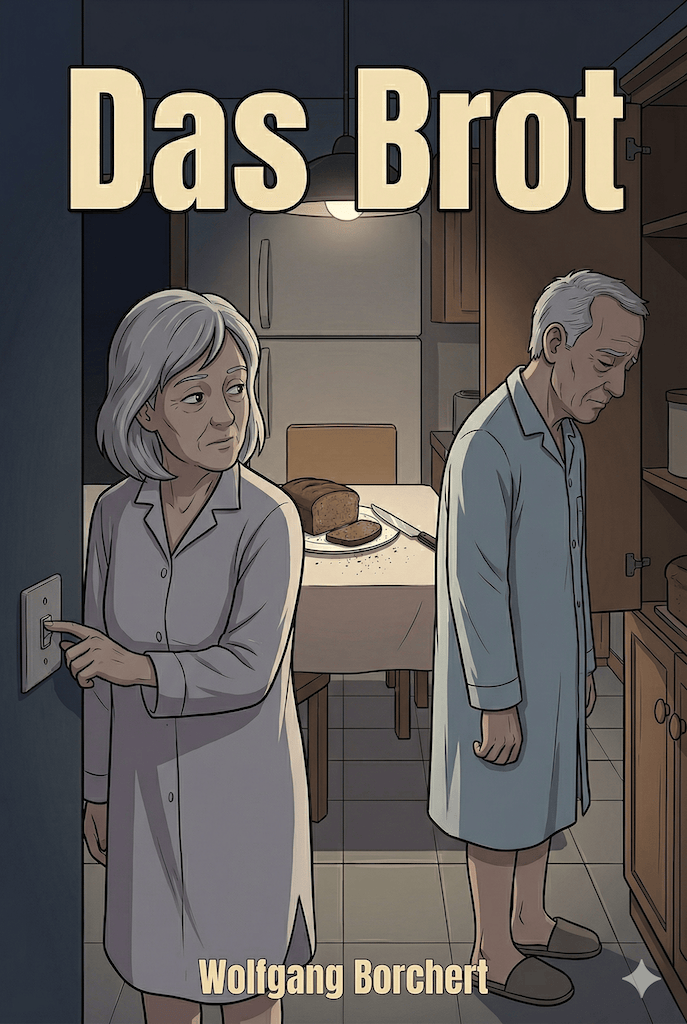
"Das Brot" is a famous short story of the "Trümmerliteratur" (rubble literature) era. It depicts a brief scene in a marriage during the food scarcity of post-war Germany. A wife discovers her husband secretly eating a slice of bread at night, but chooses to spare him the shame of confrontation.
Das Brot auf Englisch
Es ist halb drei. Die Frau wacht auf. Sie hört ein Geräusch in der Küche.
It is half past two. The woman wakes up. She hears a noise in the kitchen.
Das Bett neben ihr ist leer. Der Mann ist weg.
The bed next to her is empty. The man is gone.
Die Frau geht in die Küche. Dort steht der Mann. Sie macht das Licht an.
The woman goes into the kitchen. The man is standing there. She turns on the light.
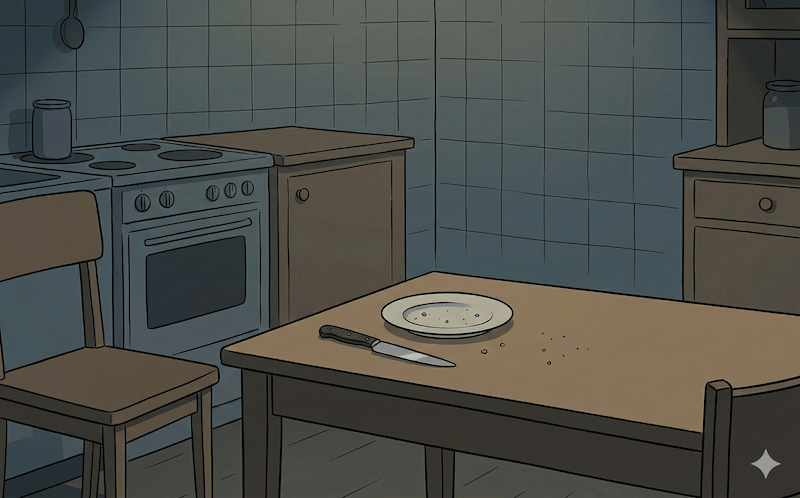
Auf dem Tisch steht ein Brotteller. Das Messer liegt daneben. Auf dem Tuch sind Brotkrümel.
On the table is a bread plate. The knife is lying next to it. There are bread crumbs on the cloth.
Die Frau spürt die Kälte. Sie sieht nicht auf den Teller.
The woman feels the cold. She does not look at the plate.
Der Mann sagt: „Ich habe etwas gehört.“
The man says: “I heard something.”
Die Frau sagt: „Ich auch.“ Der Mann sieht alt aus. Er ist dreiundsechzig Jahre alt.
The woman says: “Me too.” The man looks old. He is sixty-three years old.
Der Mann denkt: Sie sieht alt aus. Das liegt an den Haaren.
The man thinks: She looks old. It is because of her hair.
Die Frau sagt: „Zieh Schuhe an. Der Boden ist kalt.“
The woman says: “Put on your shoes. The floor is cold.”
Plötzlich wacht die Frau auf. Es ist halb drei. In der Küche hat jemand gegen einen Stuhl gestoßen. Sie horcht in die Stille.
Suddenly the woman wakes up. It is half past two. In the kitchen someone has bumped into a chair. She listens into the silence.
Das Bett neben ihr ist leer. Sein Atem fehlt. Der Mann ist weg.
The bed next to her is empty. His breathing is missing. The man is gone.
Die Frau steht auf und geht durch die dunkle Wohnung in die Küche. Dort steht der Mann. Sie macht das Licht an. Sie stehen sich im Hemd gegenüber — nachts, um halb drei.
The woman gets up and walks through the dark apartment into the kitchen. The man is standing there. She turns on the light. They face each other in their nightshirts — at night, at half past two.
Auf dem Küchentisch steht der Brotteller. Er hat sich Brot abgeschnitten. Das Messer liegt neben dem Teller. Auf dem Tuch sind Brotkrümel — jeden Abend macht sie das Tischtuch sauber, aber heute Nacht nicht.
On the kitchen table is the bread plate. He has cut himself some bread. The knife is lying next to the plate. There are bread crumbs on the cloth — every evening she wipes the tablecloth clean, but not tonight.
Sie spürt die Kälte der Fliesen. Sie sieht weg vom Teller.
She feels the cold of the tiles. She looks away from the plate.
„Ich dachte, hier ist etwas“, sagt er und schaut sich um.
“I thought there was something here,” he says, and looks around.
„Ich habe auch etwas gehört“, sagt sie. Dabei sieht sie: Er sieht nachts alt aus. So alt wie er ist — dreiundsechzig. Tagsüber sieht er manchmal jünger aus.
“I heard something too,” she says. And she sees: at night he looks old. As old as he is — sixty-three. During the day he sometimes looks younger.
Er denkt: Sie sieht nachts im Hemd ziemlich alt aus. Das liegt vielleicht an den Haaren. Bei Frauen ist das nachts immer so.
He thinks: at night, in her nightshirt, she looks rather old. Maybe it is because of her hair. With women it is always like that at night.
„Du hättest Schuhe anziehen sollen“, sagt sie. „Auf den kalten Fliesen erkältest du dich noch.“
“You should have put on your shoes,” she says. “On the cold tiles you will catch a cold.”
Plötzlich wachte sie auf. Es war halb drei. Sie überlegte, warum sie aufgewacht war. Ach so! In der Küche hatte jemand gegen einen Stuhl gestoßen. Sie horchte nach der Küche.
Suddenly she woke up. It was half past two. She wondered why she had woken up. Oh, that was it! In the kitchen someone had bumped into a chair. She listened toward the kitchen.
Es war still. Es war zu still, und als sie mit der Hand über das Bett neben sich fuhr, fand sie es leer. Das war es, was es so besonders still gemacht hatte: sein Atem fehlte.
It was quiet. It was too quiet, and when she ran her hand over the bed beside her, she found it empty. That was what had made it so especially quiet: his breathing was missing.
Sie stand auf und ging leise durch die dunkle Wohnung zur Küche. In der Küche trafen sie sich. Die Uhr war halb drei. Sie sah etwas Weißes am Küchenschrank stehen. Sie machte Licht.
She got up and walked softly through the dark apartment toward the kitchen. In the kitchen they met. The clock said half past two. She saw something white standing by the kitchen cupboard. She turned on the light.
Sie standen sich im Hemd gegenüber. Nachts. Um halb drei. In der Küche.
They stood opposite each other in their nightshirts. At night. At half past two. In the kitchen.
Auf dem Küchentisch stand der Brotteller. Sie sah, dass er sich Brot abgeschnitten hatte. Das Messer lag noch neben dem Teller. Und auf der Decke lagen Brotkrümel. Wenn sie abends zu Bett gingen, machte sie immer das Tischtuch sauber.
On the kitchen table the bread plate was standing. She saw that he had cut himself some bread. The knife was still lying next to the plate. And there were bread crumbs on the cloth. When they went to bed in the evenings, she always wiped the tablecloth clean.
Jeden Abend. Aber nun lagen Krümel auf dem Tuch. Und das Messer lag da.
Every evening. But now there were crumbs on the cloth. And the knife was lying there.
Sie fühlte, wie die Kälte der Fliesen langsam an ihr hochkroch. Und sie sah von dem Teller weg.
She felt how the cold of the tiles slowly crept up her body. And she looked away from the plate.
„Ich dachte, hier wäre was“, sagte er und sah in der Küche umher.
“I thought there was something here,” he said, and looked around the kitchen.
„Ich habe auch was gehört“, antwortete sie. Dabei fand sie, dass er nachts im Hemd doch schon recht alt aussah. So alt wie er war. Dreiundsechzig. Tagsüber sah er manchmal jünger aus.
“I heard something too,” she answered. And she found that, at night in his nightshirt, he really did look quite old. As old as he was. Sixty-three. During the day he sometimes looked younger.
Sie sieht doch schon alt aus, dachte er, im Hemd sieht sie ziemlich alt aus. Aber das liegt vielleicht an den Haaren. Bei den Frauen liegt das nachts immer an den Haaren. Die machen dann auf einmal so alt.
She does look old already, he thought; in her nightshirt she looks rather old. But maybe it’s because of her hair. With women, at night, it’s always the hair. All at once they look so old.
Plötzlich wachte sie auf. Es war halb drei. Sie überlegte, warum sie aufgewacht war. Ach so! In der Küche hatte jemand gegen einen Stuhl gestoßen. Sie horchte nach der Küche.
Suddenly she woke up. It was half past two. She wondered why she had woken up. Oh, that was it! In the kitchen someone had bumped into a chair. She listened toward the kitchen.
Es war still. Es war zu still, und als sie mit der Hand über das Bett neben sich fuhr, fand sie es leer. Das war es, was es so besonders still gemacht hatte: sein Atem fehlte.
It was quiet. It was too quiet, and when she ran her hand over the bed beside her, she found it empty. That was what had made it so especially quiet: his breathing was missing.
Sie stand auf und tappte durch die dunkle Wohnung zur Küche. In der Küche trafen sie sich. Die Uhr war halb drei. Sie sah etwas Weißes am Küchenschrank stehen. Sie machte Licht.
She got up and groped her way through the dark apartment toward the kitchen. In the kitchen they met. The clock said half past two. She saw something white standing by the kitchen cupboard. She turned on the light.
Sie standen sich im Hemd gegenüber. Nachts. Um halb drei. In der Küche.
They stood opposite each other in their nightshirts. At night. At half past two. In the kitchen.
Auf dem Küchentisch stand der Brotteller. Sie sah, dass er sich Brot abgeschnitten hatte. Das Messer lag noch neben dem Teller. Und auf der Decke lagen Brotkrümel. Wenn sie abends zu Bett gingen, machte sie immer das Tischtuch sauber. Jeden Abend.
On the kitchen table the bread plate was standing. She saw that he had cut himself some bread. The knife was still lying next to the plate. And there were bread crumbs on the cloth. When they went to bed in the evenings, she always wiped the tablecloth clean. Every evening.
Aber nun lagen Krümel auf dem Tuch. Und das Messer lag da.
But now there were crumbs on the cloth. And the knife was lying there.
Sie fühlte, wie die Kälte der Fliesen langsam an ihr hochkroch. Und sie sah von dem Teller weg.
She felt how the cold of the tiles slowly crept up her body. And she looked away from the plate.
„Ich dachte, hier wäre was“, sagte er und sah in der Küche umher.
“I thought there was something here,” he said, and looked around the kitchen.
„Ich habe auch was gehört“, antwortete sie, und dabei fand sie, dass er nachts im Hemd doch schon recht alt aussah. So alt wie er war. Dreiundsechzig. Tagsüber sah er manchmal jünger aus.
“I heard something too,” she answered, and at the same time felt that, at night in his nightshirt, he really did look quite old. As old as he was. Sixty-three. During the day he sometimes looked younger.
Sie sieht doch schon alt aus, dachte er, im Hemd sieht sie doch ziemlich alt aus. Aber das liegt vielleicht an den Haaren. Bei den Frauen liegt das nachts immer an den Haaren. Die machen dann auf einmal so alt.
She does look old already, he thought; in her nightshirt she does look rather old. But maybe it’s because of her hair. With women, at night, it’s always the hair. All at once they look so old.
Du hast die ersten 30 % von Das Brot gelesen.
In der App weiterlesen
Das ist der kostenlose Anfang. Den Rest – mit Audio, Karteikarten und Übersetzungen auf Persisch, Türkisch und Arabisch – gibt es in der App.
Zu jedem deutschen Satz gehört die englische Übersetzung – lies nur das Deutsche oder schau Satz für Satz ins Englische. Der Anfang steht hier kostenlos; weiter geht die Geschichte in der App, dort auch auf Persisch, Türkisch und Arabisch.