 Mitlesen
Die Küchenuhr
The Kitchen Clock
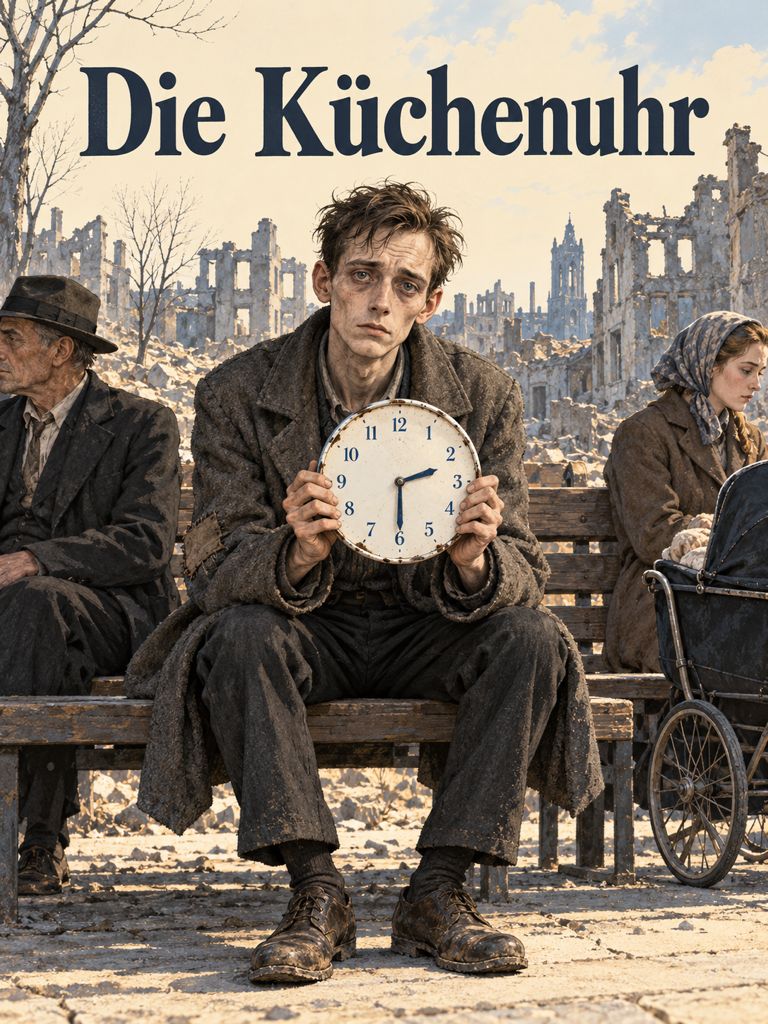
A young man of twenty with a strangely old face sits down on a bench in the sun beside a few strangers and shows them the one thing he has left: a plain white kitchen clock with blue numbers. The clock no longer works; it stopped at exactly half past two. The others assume a bomb stopped it, but he insists that half past two meant something quite different in his home, and he eagerly explains what that hour used to be, while the people on the bench fall silent one by one.
Die Küchenuhr in English
Ein paar Leute sitzen auf einer Bank in der Sonne. Von Weitem sehen sie einen Mann. Er kommt zu ihnen.
A few people are sitting on a bench in the sun. From far away they see a man. He comes over to them.
Er sieht anders aus. Sein Gesicht ist ganz alt. Aber er geht wie ein junger Mann.
He looks unusual. His face is very old. But he walks like a young man.
Er ist erst zwanzig Jahre alt. Er setzt sich zu den Leuten auf die Bank. In der Hand hat er etwas.
He is only twenty years old. He sits down with the people on the bench. He has something in his hand.
Er zeigt es den Leuten. „Das war unsere Küchenuhr“, sagt er.
He shows it to the people. “That was our kitchen clock,” he says.
Er sieht alle Leute an. „Sie war noch da.“ „Nur die Uhr ist noch da.“
He looks at all the people. “It was still there.” “Only the clock is left.”
Die Uhr ist rund und weiß wie ein Teller. Die Zahlen sind blau. Er tippt mit dem Finger auf die blauen Zahlen.
The clock is round and white like a plate. The numbers are blue. He taps the blue numbers with his finger.
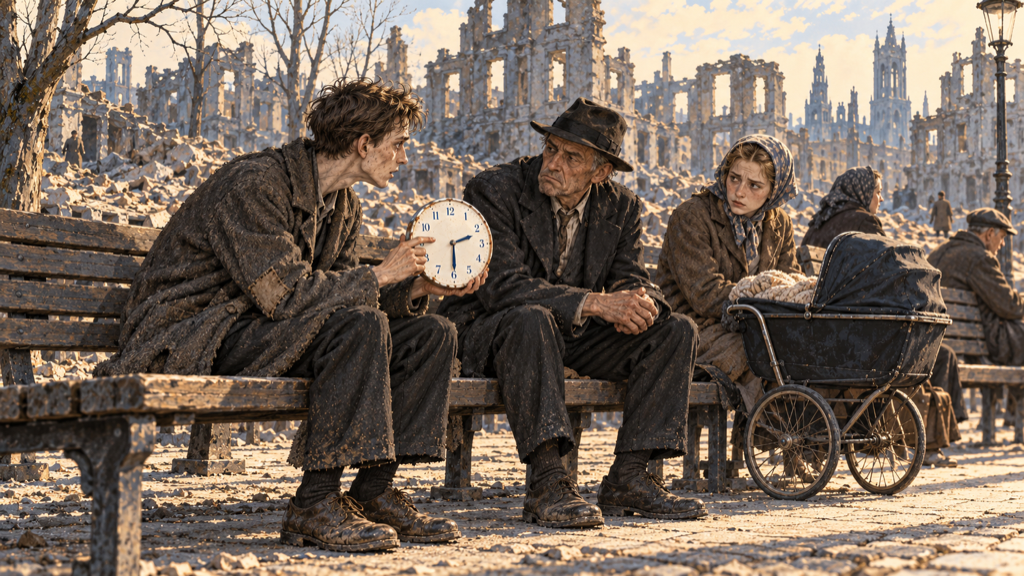
„Die Uhr ist nicht viel wert“, sagt er leise. „Das weiß ich.“ „Sie ist auch nicht besonders schön.“
“The clock isn't worth much,” he says quietly. “I know that.” “It isn't especially beautiful either.”
„Sie ist nur weiß wie ein Teller.“ „Aber die blauen Zahlen finde ich schön.“ „Die Zeiger sind nur aus Blech.“
“It's just white, like a plate.” “But I think the blue numbers are pretty.” “The hands are only tin.”
„Und die Uhr geht nicht mehr.“ „Sie ist innen kaputt.“ „Aber sie sieht noch aus wie immer.“
“And the clock doesn't work any more.” “It's broken inside.” “But it still looks the same as always.”
Mit dem Finger fährt er vorsichtig einmal um die Uhr herum. Leise sagt er: „Nur sie ist noch da.“
Carefully he runs his finger once around the edge of the clock. Quietly he says, “It's the only thing that's left.”
Die Leute auf der Bank sehen ihn nicht an. Ein Mann sieht auf seine Schuhe. Eine Frau sieht in ihren Kinderwagen.
The people on the bench don't look at him. A man looks at his shoes. A woman looks into her pram.
Dann fragt jemand: „Ist bei Ihnen alles weg?“
Then someone asks, “Is everything gone?”
„Ja, ja, alles!“, sagt er fröhlich. „Nur die Uhr ist noch da.“ Er hält die Uhr wieder hoch.
“Yes, yes, everything!” he says cheerfully. “Only the clock is left.” He holds up the clock again.
Die Frau sagt: „Aber die Uhr geht doch nicht mehr.“
The woman says, “But the clock doesn't work any more.”
Ein paar Leute sitzen auf einer Bank in der Sonne. Schon von Weitem sehen sie einen jungen Mann auf sich zukommen. Er fällt sofort auf.
A few people are sitting on a bench in the sun. Even from far away they see a young man coming towards them. He stands out straight away.
Er hat ein ganz altes Gesicht. Aber an seinem Gang sieht man, dass er erst zwanzig ist. Er setzt sich mit seinem alten Gesicht zu ihnen auf die Bank. Dann zeigt er ihnen, was er in der Hand hat.
He has a very old face. But from the way he walks you can tell that he is only twenty. He sits down with them on the bench, with his old face. Then he shows them what he has in his hand.
„Das war unsere Küchenuhr“, sagt er. Er sieht alle der Reihe nach an. „Ich habe sie noch gefunden.“ „Sie ist übrig geblieben.“
“That was our kitchen clock,” he says. He looks at each of them in turn. “I managed to find it.” “It's all that's left.”
Die Uhr ist rund und weiß wie ein Teller. Die Zahlen sind blau gemalt. Er tippt mit dem Finger auf die blauen Zahlen.
The clock is round and white like a plate. The numbers are painted blue. He taps the blue numbers with his finger.
Er sagt fast entschuldigend: „Die Uhr ist nicht viel wert, das weiß ich.“ „Sie ist auch nicht besonders schön.“ „Sie ist nur wie ein Teller mit weißem Lack.“ „Aber die blauen Zahlen sehen doch hübsch aus.“
He says, almost apologetically, “The clock isn't worth much, I know that.” “It isn't especially beautiful either.” “It's just like a plate with white enamel.” “But the blue numbers do look pretty.”
„Die Zeiger sind nur aus Blech, und sie bewegen sich nicht mehr.“ „Innen ist die Uhr kaputt.“ „Aber sie sieht noch aus wie immer, auch wenn sie nicht mehr geht.“
“The hands are only tin, and they don't move any more.” “Inside, the clock is broken.” “But it still looks the same as ever, even though it doesn't work any more.”
Mit der Fingerspitze fährt er vorsichtig im Kreis am Rand entlang. Leise sagt er: „Und sie ist übrig geblieben.“
With his fingertip he carefully traces a circle around the rim. Quietly he says, “And it's all that's left.”
Die Leute auf der Bank sehen ihn nicht an. Einer sieht auf seine Schuhe. Eine Frau sieht in ihren Kinderwagen.
The people on the bench don't look at him. One of them looks at his shoes. A woman looks into her pram.
Dann fragt jemand: „Sie haben wohl alles verloren?“
Then someone asks, “I suppose you've lost everything?”
„Ja, ja, wirklich alles!“, sagt er fröhlich. „Nur die Uhr hier ist übrig.“ Wieder hält er die Uhr hoch und zeigt sie allen.
“Yes, yes, absolutely everything!” he says cheerfully. “Only this clock is left.” Once again he holds up the clock and shows it to everyone.
„Aber sie geht doch nicht mehr“, sagt die Frau.
“But it doesn't work any more,” says the woman.
Die Leute auf der Bank sahen ihn schon von Weitem auf sich zukommen, denn er fiel auf. Er hatte ein ganz altes Gesicht, aber an seinem Gang sah man, dass er erst zwanzig war. Er setzte sich mit seinem alten Gesicht zu ihnen auf die Bank. Dann zeigte er ihnen, was er in der Hand trug.
The people on the bench saw him coming towards them from far away, because he stood out. He had a very old face, but you could tell from the way he walked that he was only twenty. He sat down with them on the bench, with his old face. Then he showed them what he was carrying in his hand.
„Das war unsere Küchenuhr“, sagte er und sah alle der Reihe nach an, die auf der Bank in der Sonne saßen. „Ja, ich habe sie noch gefunden. Sie ist übrig geblieben.“
“That was our kitchen clock,” he said, looking in turn at each of the people sitting on the bench in the sun. “Yes, I managed to find it. It's all that's left.”
Er hielt eine runde Küchenuhr vor sich, weiß wie ein Teller, und tippte mit dem Finger auf die blau gemalten Zahlen.
He held up a round kitchen clock, white as a plate, and tapped the blue-painted numbers with his finger.
„Sie ist nicht viel wert“, meinte er entschuldigend, „das weiß ich auch. Und besonders schön ist sie auch nicht. Sie ist nur wie ein Teller, mit weißem Lack. Aber die blauen Zahlen sehen doch ganz hübsch aus, finde ich.“
“It isn't worth much,” he said apologetically, “I know that. And it isn't especially beautiful either. It's just like a plate, with white enamel. But the blue numbers look quite pretty, I think.”
„Die Zeiger sind natürlich nur aus Blech. Und jetzt bewegen sie sich auch nicht mehr. Innerlich ist sie kaputt, das ist sicher. Aber sie sieht noch aus wie immer, auch wenn sie jetzt nicht mehr geht.“
“The hands are only tin, of course. And now they don't move any more. It's broken inside, that's certain. But it still looks the same as ever, even though it doesn't work any more.”
Mit der Fingerspitze fuhr er vorsichtig im Kreis am Rand der Uhr entlang. Und er sagte leise: „Und sie ist übrig geblieben.“
With his fingertip he carefully traced a circle along the rim of the clock. And he said quietly, “And it's all that's left.”
Die Leute auf der Bank sahen ihn nicht an. Einer sah auf seine Schuhe, und die Frau sah in ihren Kinderwagen. Dann fragte jemand: „Sie haben wohl alles verloren?“
The people on the bench didn't look at him. One of them looked at his shoes, and the woman looked into her pram. Then someone asked, “I suppose you've lost everything?”
„Ja, ja“, sagte er fröhlich, „stellen Sie sich vor, wirklich alles! Nur sie hier ist übrig.“ Und er hob die Uhr wieder hoch, als ob die anderen sie noch nicht gesehen hätten.
“Yes, yes,” he said cheerfully, “just imagine, absolutely everything! Only this one is left.” And he held up the clock again, as if the others hadn't seen it yet.
„Aber sie geht doch nicht mehr“, sagte die Frau.
“But it doesn't work any more,” said the woman.
Sie sahen ihn schon von Weitem auf sich zukommen, denn er fiel auf. Er hatte ein ganz altes Gesicht, aber an seinem Gang sah man, dass er erst zwanzig war. Er setzte sich mit seinem alten Gesicht zu ihnen auf die Bank. Und dann zeigte er ihnen, was er in der Hand trug.
They saw him coming towards them from far away, because he stood out. He had a very old face, but from the way he walked you could see that he was only twenty. He sat down on the bench beside them, with his old face. And then he showed them what he was carrying in his hand.
„Das war unsere Küchenuhr“, sagte er und sah sie alle der Reihe nach an, die auf der Bank in der Sonne saßen. „Ja, ich habe sie noch gefunden. Sie ist übrig geblieben.“
“That was our kitchen clock,” he said, looking at each of them in turn as they sat on the bench in the sun. “Yes, I managed to find it. It's all that's left.”
Er hielt eine runde Küchenuhr, weiß wie ein Teller, vor sich hin und tippte mit dem Finger die blau gemalten Zahlen an.
He held out in front of him a round kitchen clock, white as a plate, and tapped the blue-painted numbers with his finger.
„Sie hat weiter keinen Wert“, meinte er entschuldigend, „das weiß ich auch. Und sie ist auch nicht besonders schön. Sie ist nur wie ein Teller, so mit weißem Lack. Aber die blauen Zahlen sehen doch ganz hübsch aus, finde ich.“
“It has no real value,” he said apologetically, “I know that. And it isn't especially beautiful either. It's just like a plate, with white enamel. But the blue numbers look quite pretty, I think.”
„Die Zeiger sind natürlich nur aus Blech. Und jetzt gehen sie auch nicht mehr. Nein. Innerlich ist sie kaputt, das steht fest. Aber sie sieht noch aus wie immer. Auch wenn sie jetzt nicht mehr geht.“
“The hands are only tin, of course. And now they don't move any more. No. It's broken inside, that much is certain. But it still looks just the same as ever. Even though it doesn't work any more.”
Mit der Fingerspitze fuhr er vorsichtig im Kreis am Rand der Uhr entlang. Und er sagte leise: „Und sie ist übrig geblieben.“
With his fingertip he carefully traced a circle along the rim of the clock. And he said quietly, “And it's all that's left.”
Die Leute, die auf der Bank in der Sonne saßen, sahen ihn nicht an. Einer sah auf seine Schuhe, und die Frau sah in ihren Kinderwagen. Dann fragte jemand: „Sie haben wohl alles verloren?“
The people sitting on the bench in the sun didn't look at him. One of them looked at his shoes, and the woman looked into her pram. Then someone asked, “I suppose you've lost everything?”
„Ja, ja“, sagte er fröhlich, „stellen Sie sich vor, wirklich alles! Nur sie hier, sie ist übrig.“ Und er hob die Uhr wieder hoch, als ob die anderen sie noch nicht gesehen hätten.
“Yes, yes,” he said cheerfully, “just imagine, absolutely everything! Only this one here – it's all that's left.” And he held up the clock again, as if the others hadn't seen it yet.
„Aber sie geht doch nicht mehr“, sagte die Frau.
“But it doesn't work any more,” said the woman.
You have read the first 30% of Die Küchenuhr.
Continue in the app
This is the free opening. The rest — with audio, flashcards and translations in Persian, Turkish and Arabic — is in the app.
Every German sentence is paired with its English translation — read the German on its own, or check the English line by line. The opening is free to read here; the full story continues in the app, where it also reads in Persian, Turkish and Arabic.